Case Study
CPS Academy
Designing a gamified learning system to close the creative problem-solving gap in design education.
The Problem
Design education teaches technique. It rarely teaches students how to think through a problem they've never seen before — how to break it apart, research it properly, generate ideas without going blank, and evaluate solutions with any rigour.
The result is a predictable pattern: students with strong execution skills but unclear creative process. They know how to make, but struggle to begin.
We built CPS Academy to address this gap — specifically for design students who need a structured, learnable approach to creative problem solving, without another course to add to their schedule.
The Process
The project followed a double-diamond structure across four phases: Discover, Define, Develop, Deliver. The focus of the early phases was understanding the problem from multiple angles — student frustrations, educator perspectives, and the competitive landscape — before any design decisions were made.
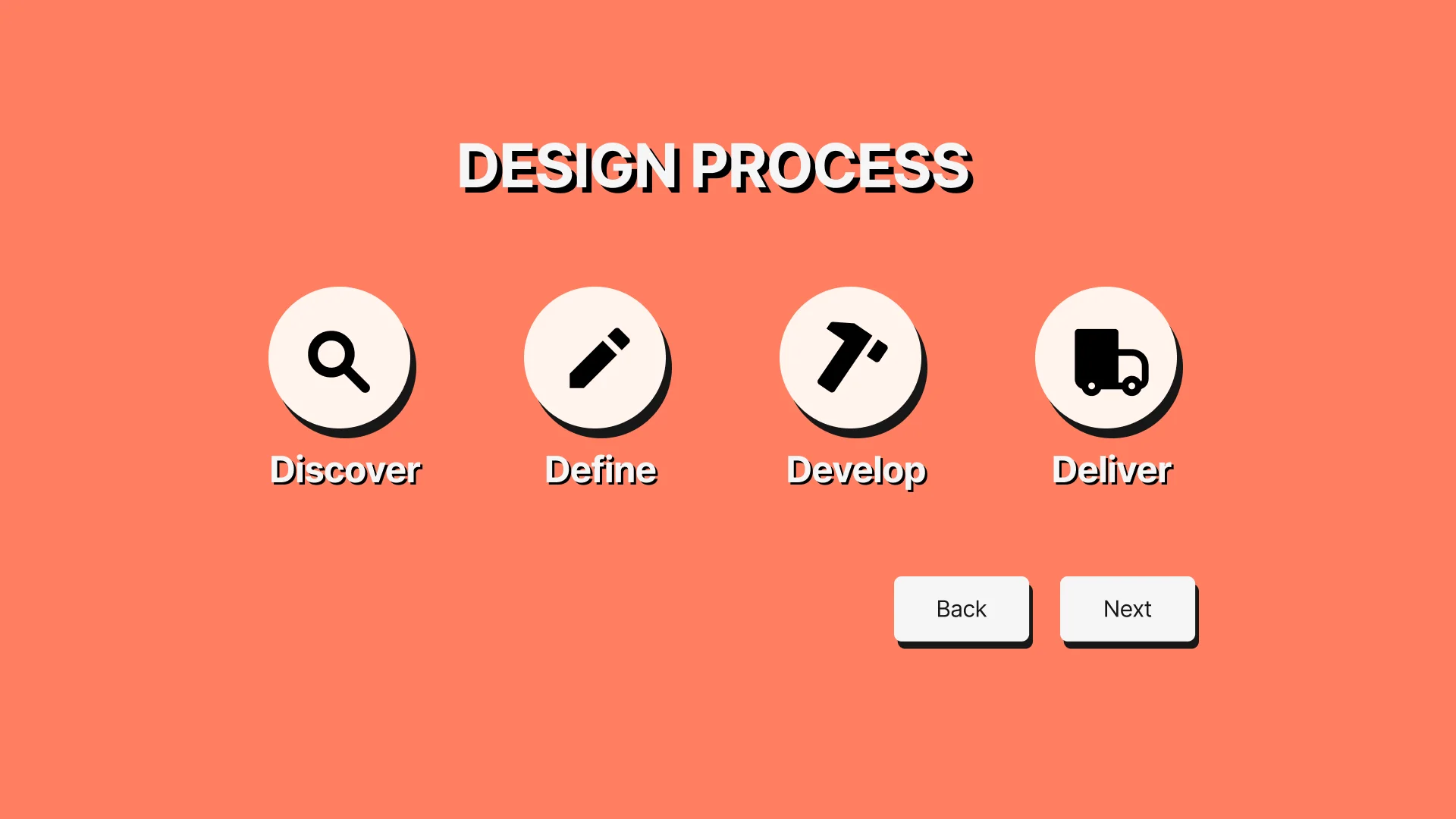
The design process — four phases, one direction
The Research
User interviews revealed a consistent pattern across students at different stages. The problems were not about skill — they were about process. Students didn't know where to start, how to evaluate their ideas, or what to do when they hit a wall. Frustration was the common thread. Empathy mapping across three distinct user archetypes confirmed that this wasn't a niche problem — it was structural.
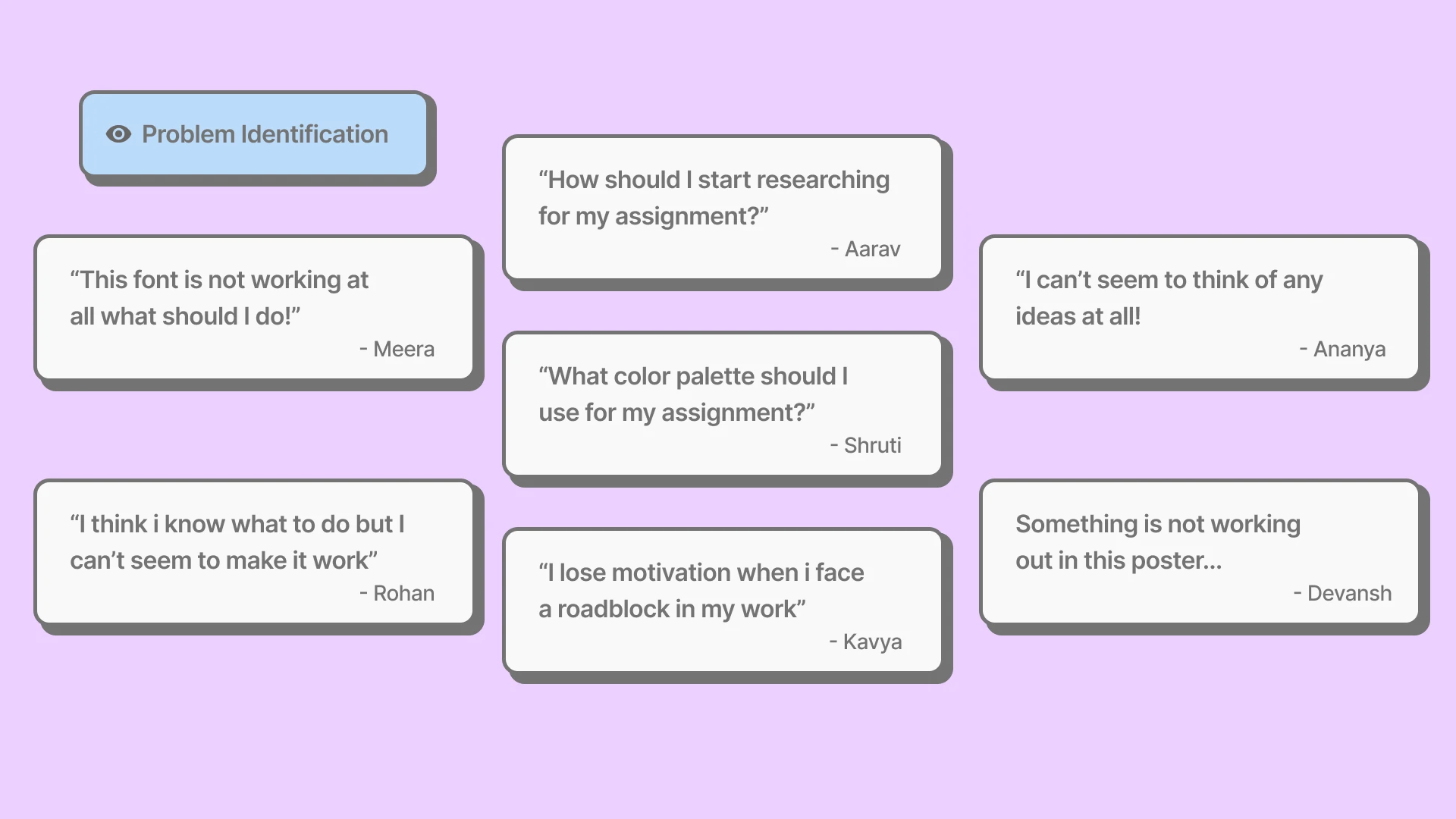
Problem identification — six voices, one pattern
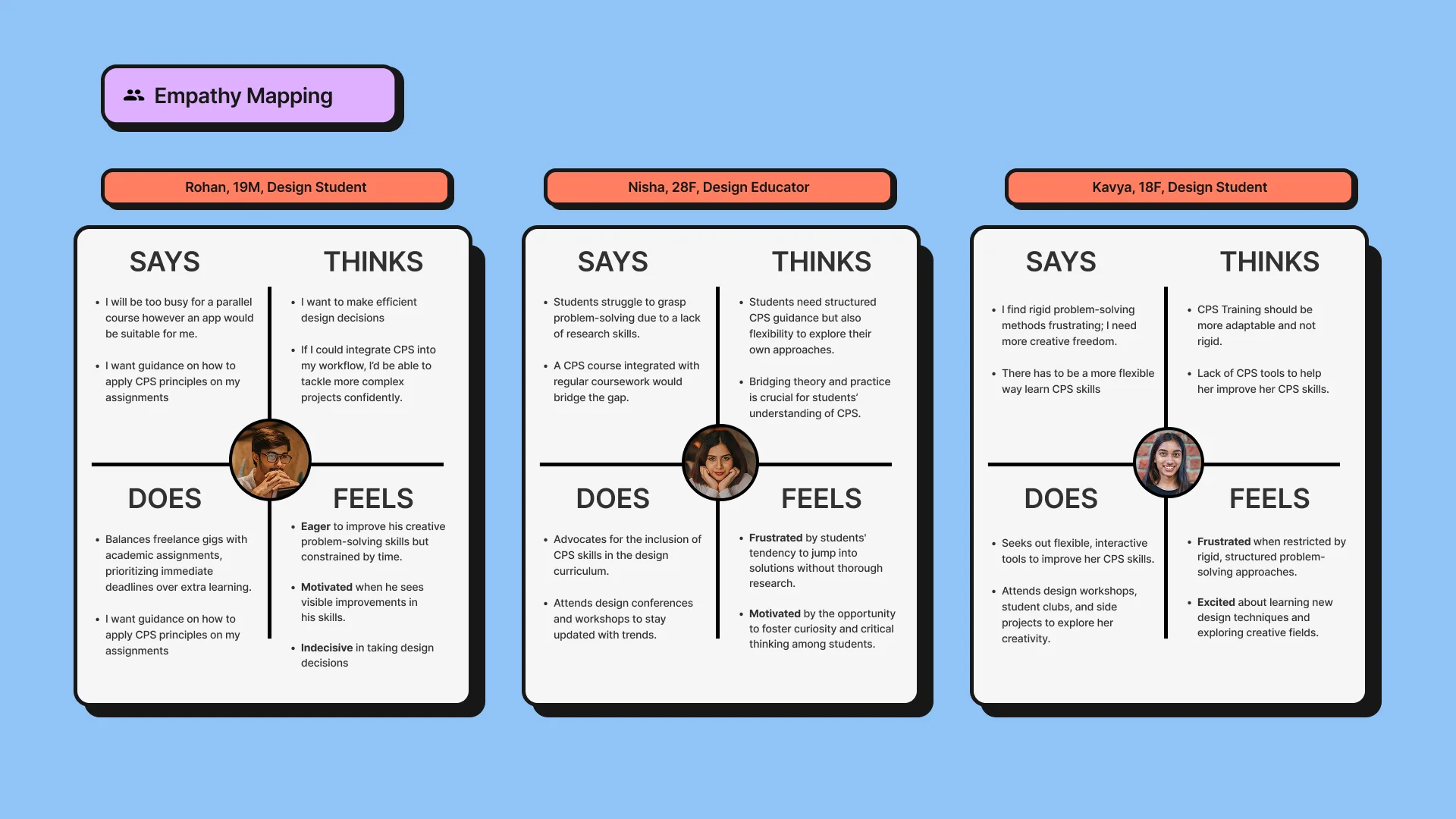
Empathy mapping — three users, consistent pain points
The Gap
Competitor analysis against NeuroNation, Duolingo, and Coursera confirmed what the research suggested: existing platforms address engagement or content breadth, but none focus on creative problem-solving as a teachable skill, and none integrate real-world design problems into their methodology.
Every platform in the comparison offered gamification or progress tracking. None offered CPS-focused training. None offered real-world problem integration. That gap defined the product opportunity.
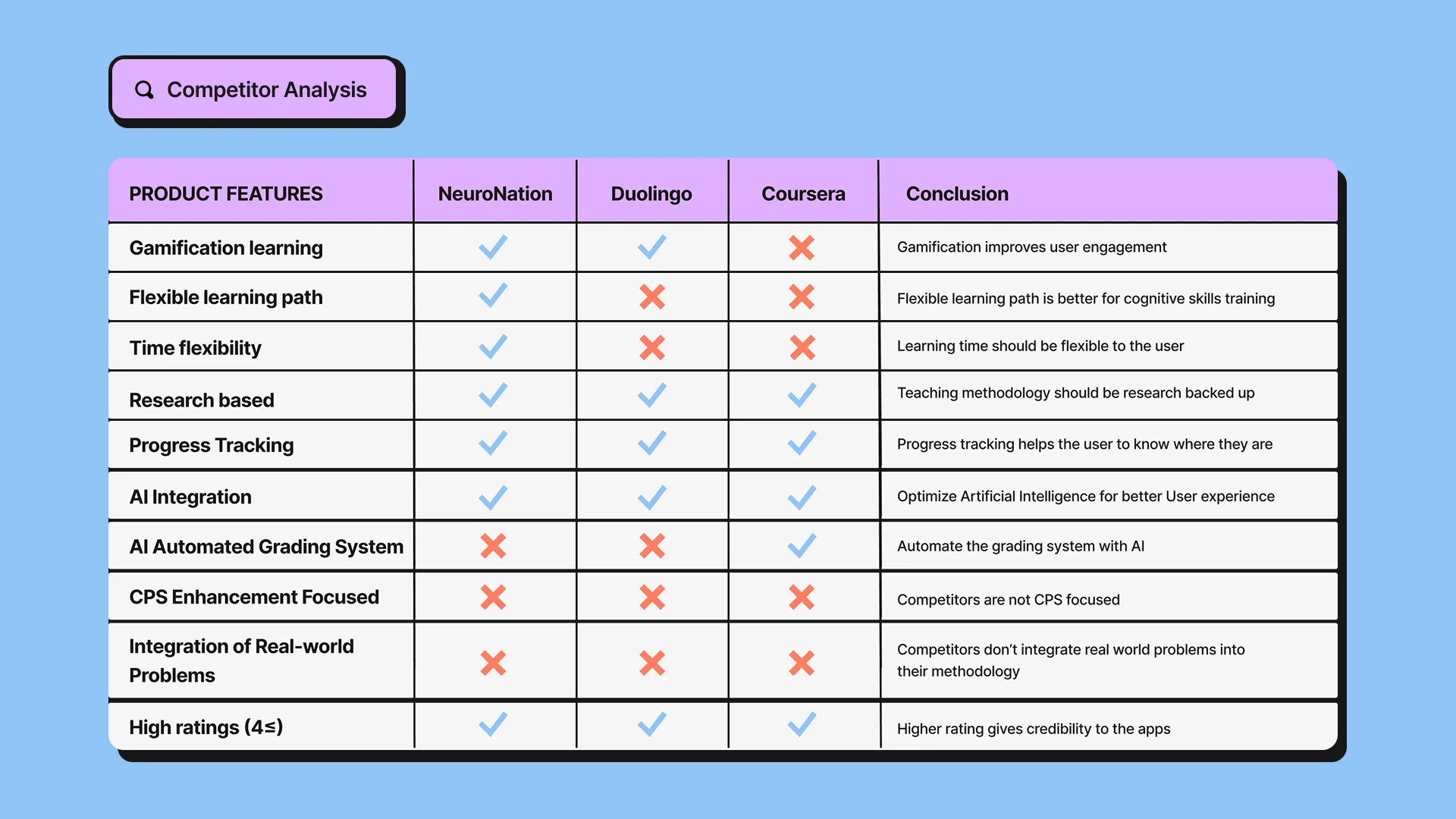
Competitor analysis — the gap none of the market leaders address
The Concept
We built the solution around three pedagogical principles: behaviour shaping through regular CPS practice with real-world contexts, constructivism through project-based reflection, and multi-disciplinary thinking through cross-field problem briefs.
We embedded AI at three points in the learning experience — not as a single general assistant, but as three purpose-designed systems. The Professor evaluates student solutions against a structured rubric. The Mentor guides students through the problem-solving process in real time. The Assistant Professor simulates a design process, walking users through decisions step by step.
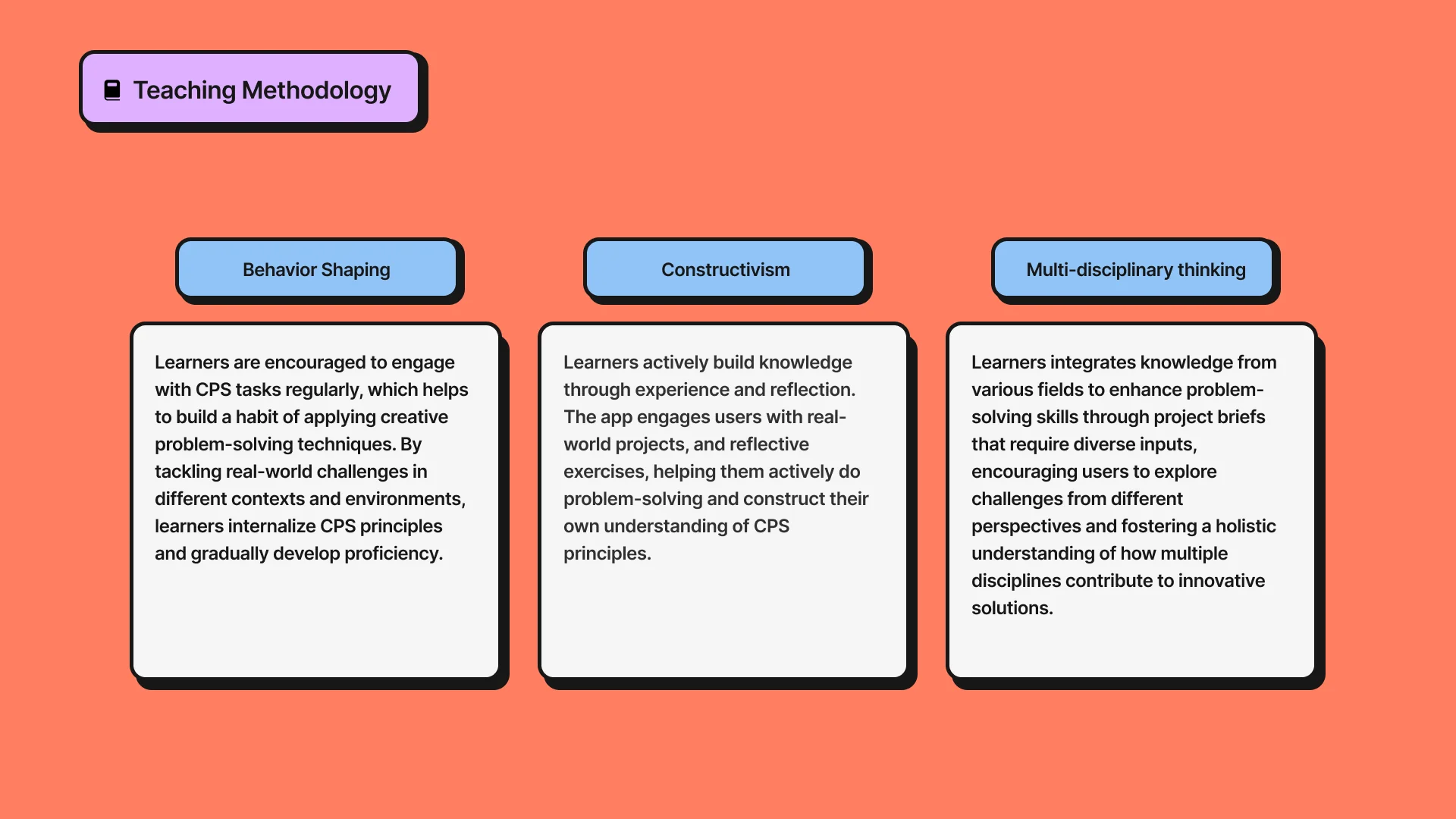
Teaching methodology — three learning theory pillars
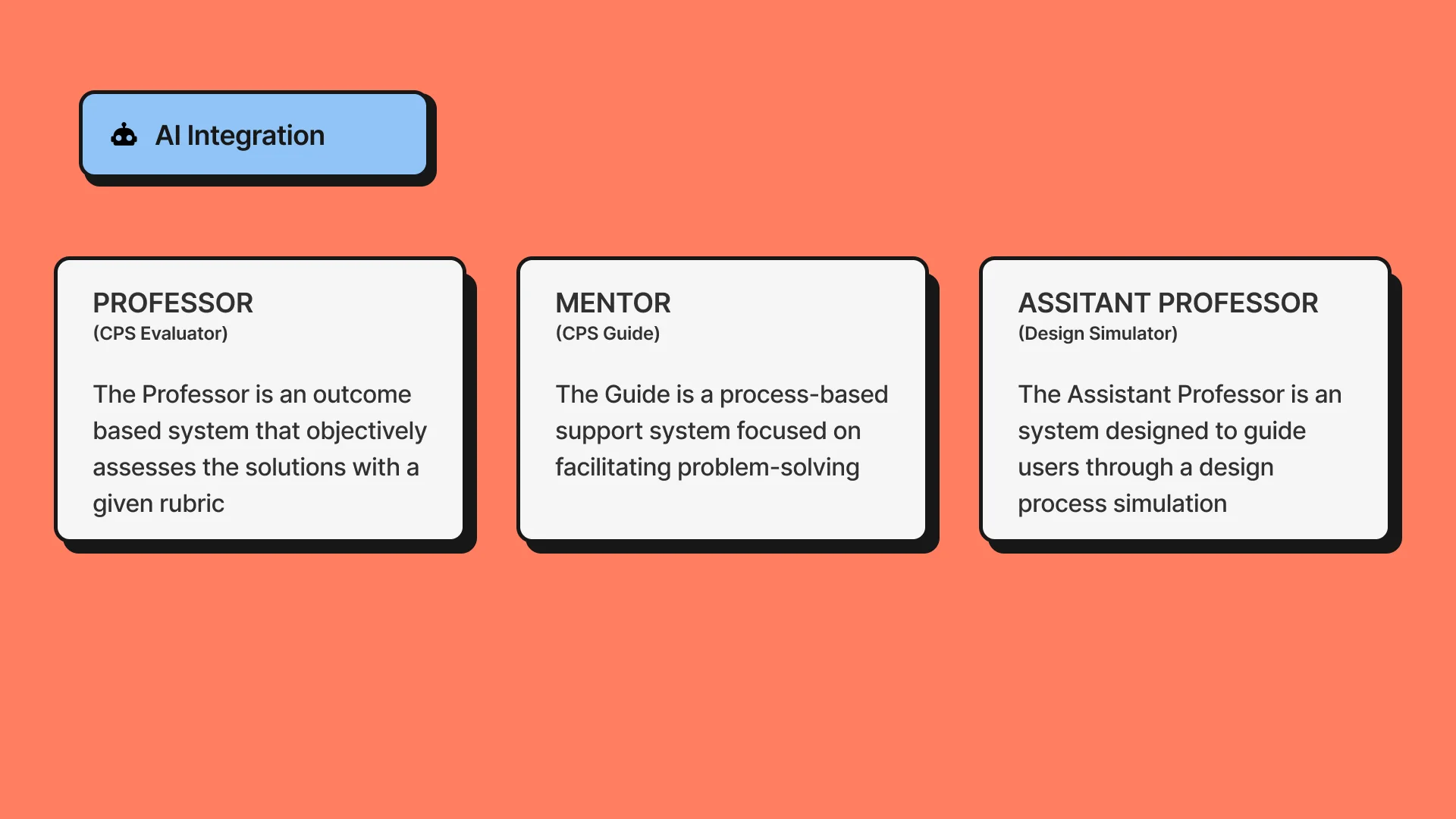
AI integration — three roles, three distinct functions
The Build
We prototyped and tested each AI component with a structured evaluation method so students received clear, criteria-based feedback. The app structure mapped four core sections: Stages, Tools, Progress Tracker, and Menu, with guided paths based on performance.
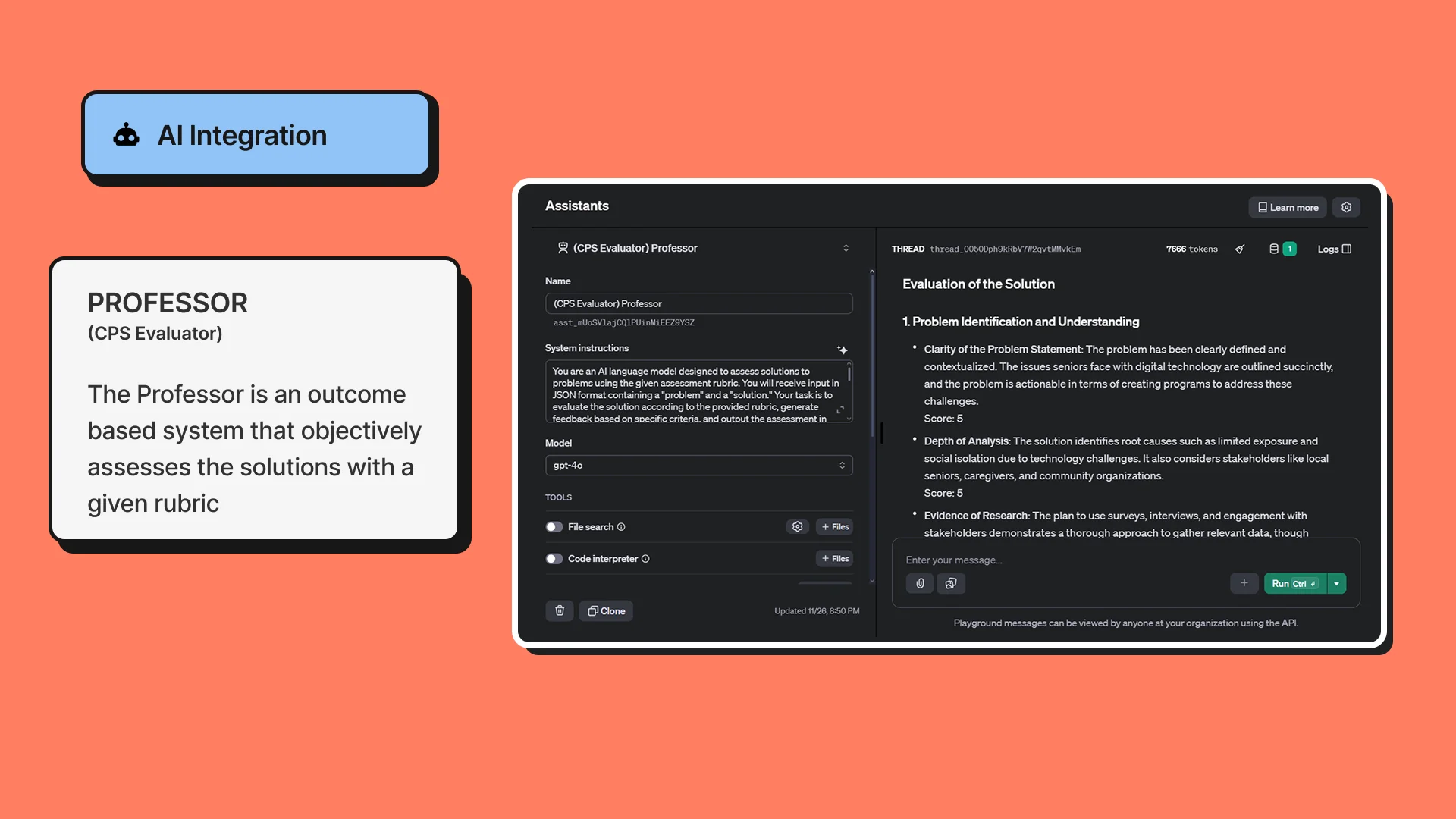
The Professor AI — rubric-based evaluation in the Assistants playground
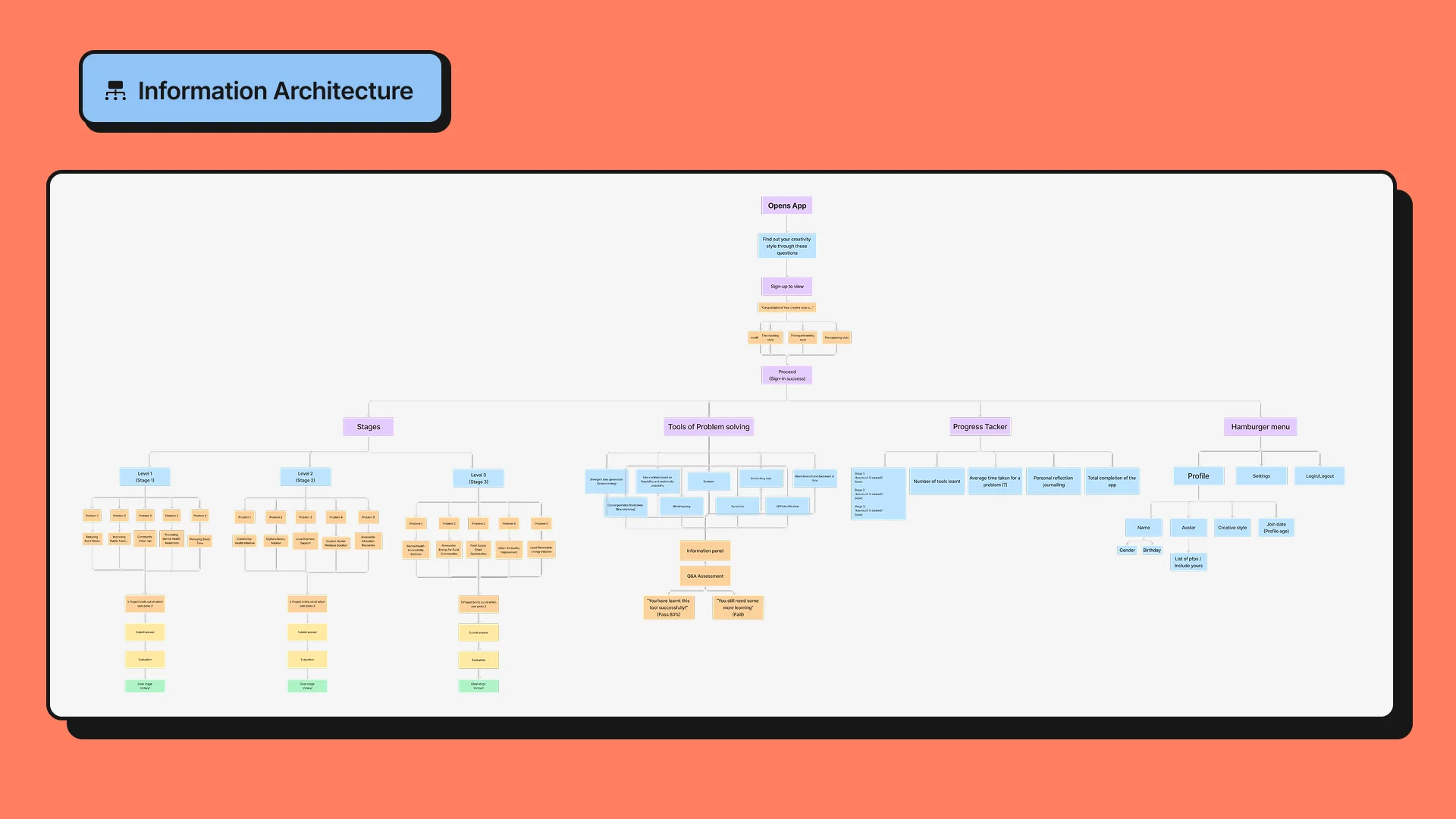
Information architecture — full app structure
The Outcome
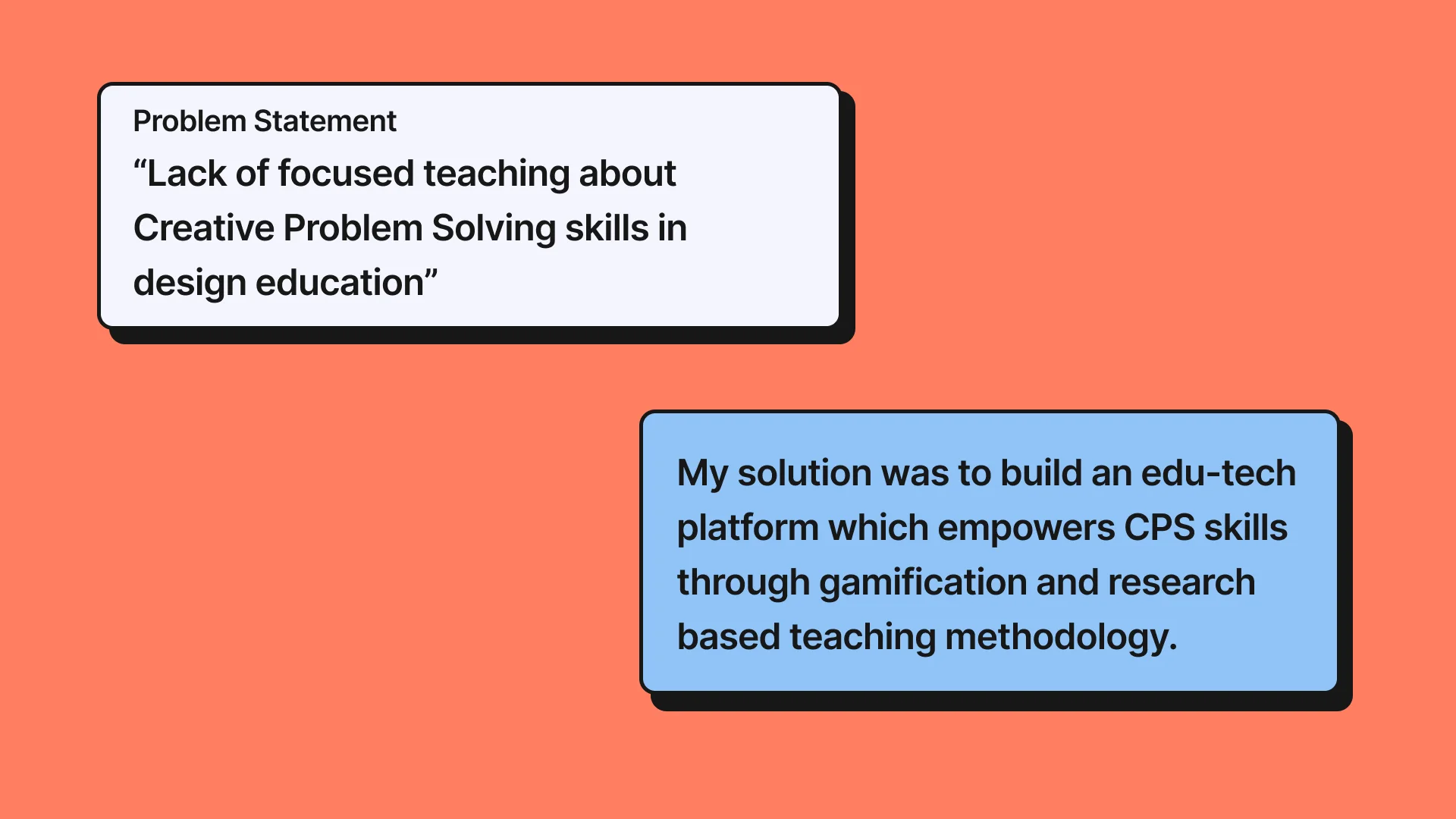
From a clearly defined problem to a working, tested product. CPS Academy covers the full arc — field research, literature review, competitive analysis, concept development, AI integration, information architecture, and a high-fidelity interactive prototype.
The platform directly addresses a gap the existing market hasn't addressed. That's not an opinion — it's what the research showed.
Problem to solution — the complete arc