Case Study
MindDhara
A nature-rooted identity system built to scale across three distinct sub-brands from day one.
The Mark
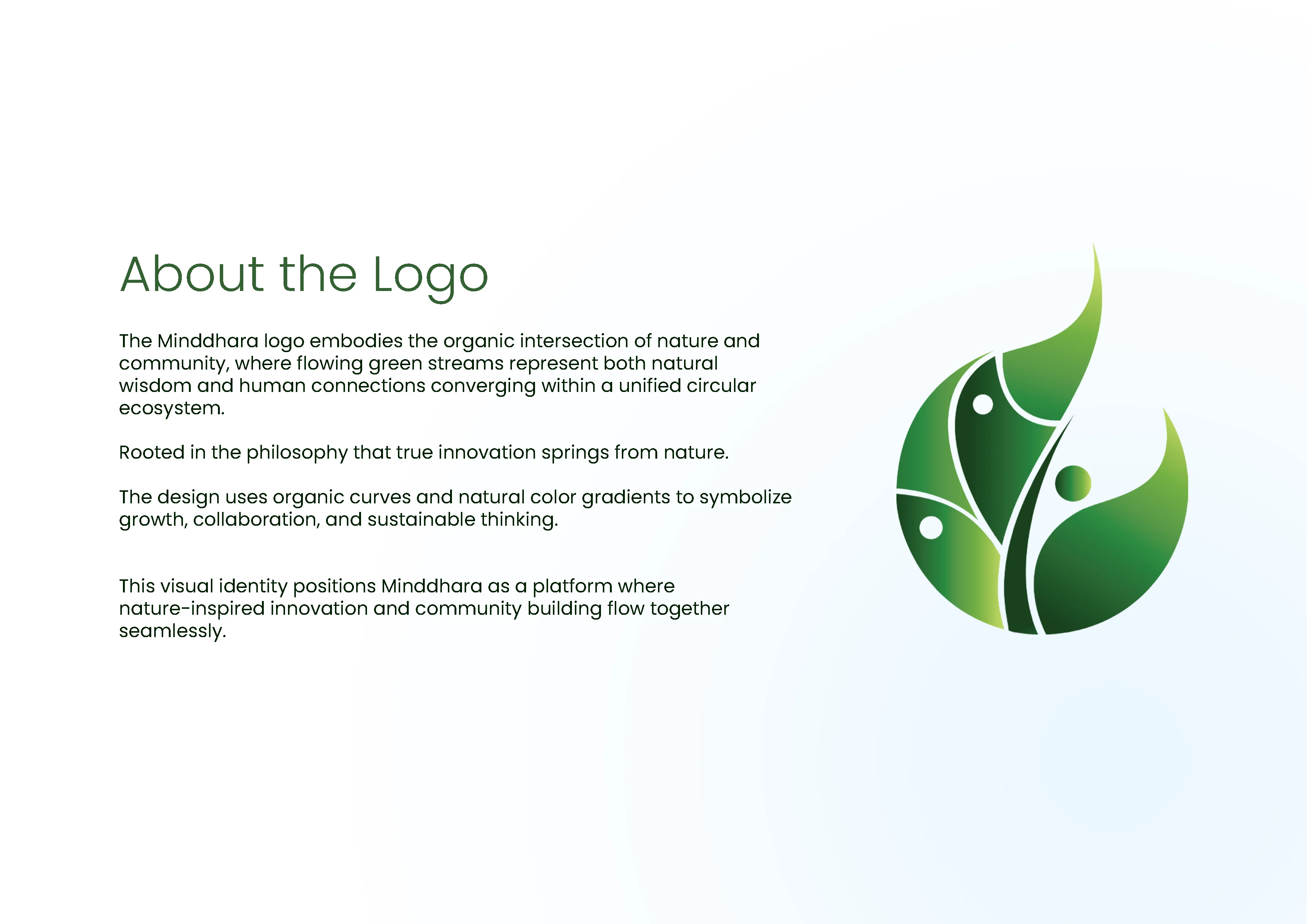
MindDhara — from the Sanskrit "dhara," meaning flow — is a mental wellness platform built around the idea that innovation and wellbeing are rooted in nature.
The icon is a circular form containing three organic leaf shapes and abstract human figures, drawn together into a single flowing gesture. The form reads as both botanical and communal — growth and connection as one unified concept, not two separate ideas.
The wordmark is set in a high-contrast transitional serif with open letterforms. Against the organic mark, the type provides structure without rigidity.
The mark — organic form, structured rationale
The Colour
The palette is built entirely from the green spectrum — five distinct tones ranging from Phthalo Green at the deep end to Chinese Green at the lightest. The gradient in the primary logo draws from the full range; the solid variants confirm that the mark holds at any single point in the scale.
There are no secondary or accent colours. The decision is deliberate — a wellness brand that competes on calm, not stimulation, doesn't need a disruptive accent. The palette does its work through depth and variation within a single family.
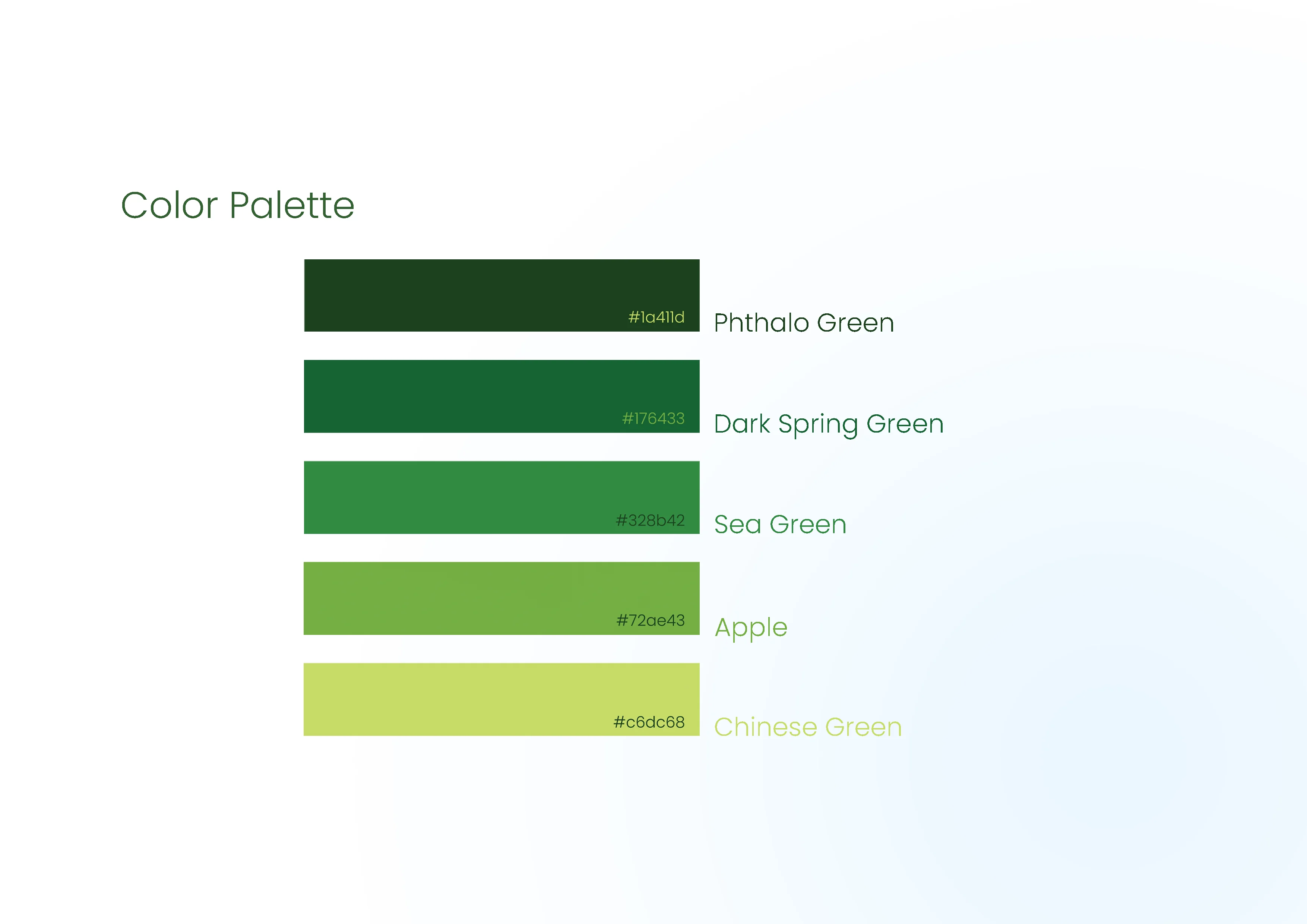
Colour palette — five tones, one family
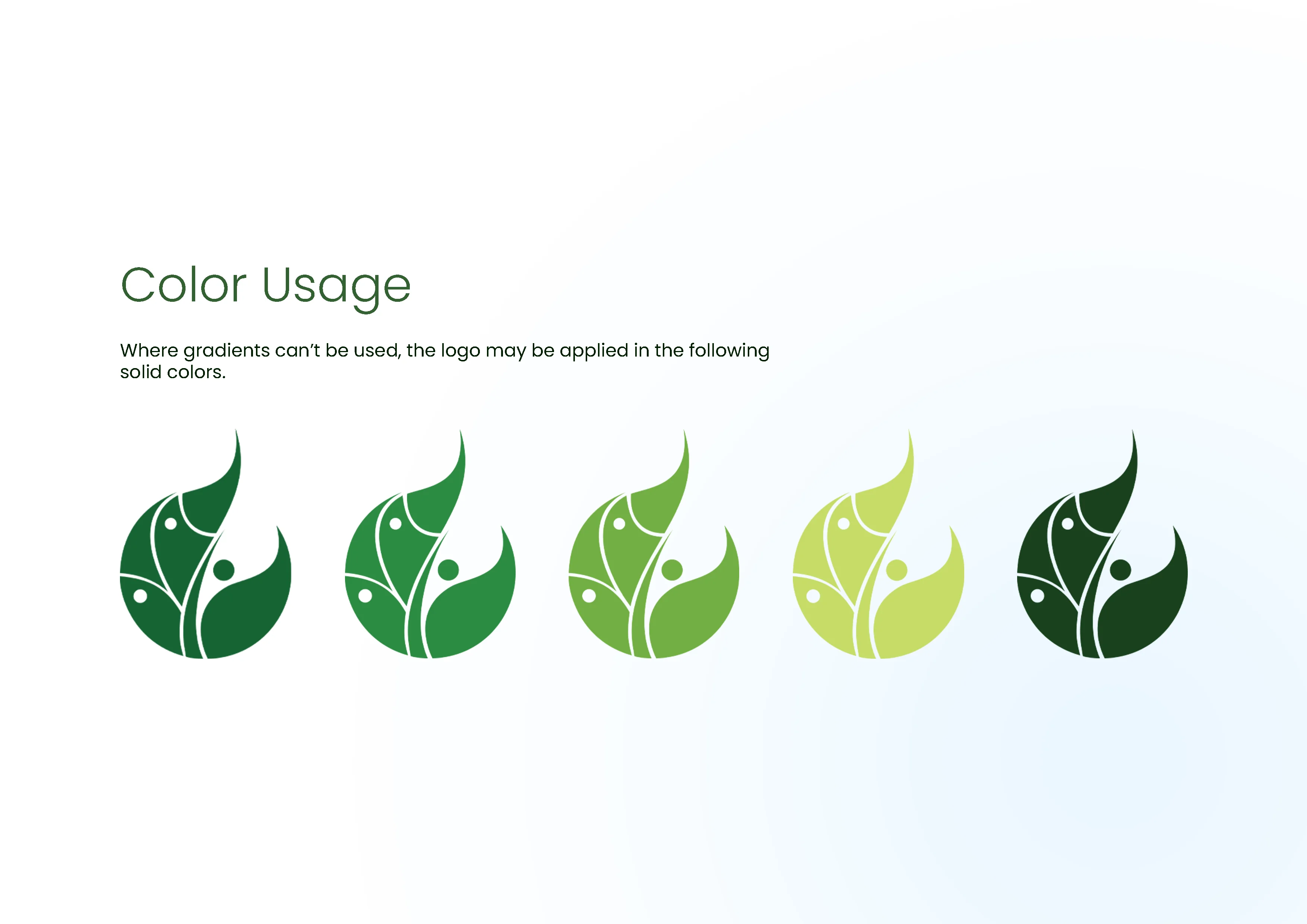
Colour usage — the mark holds at every point in the scale
The System
A mark that only works in colour is a fragile mark. The monochrome test is where most identity systems fail — gradients collapse, detail disappears, and what looked premium in the brand presentation looks generic in print.
MindDhara passes it. On black, the reversed form holds the same presence as the full-colour version. The organic line structure, which gives the mark its character, survives the reduction.
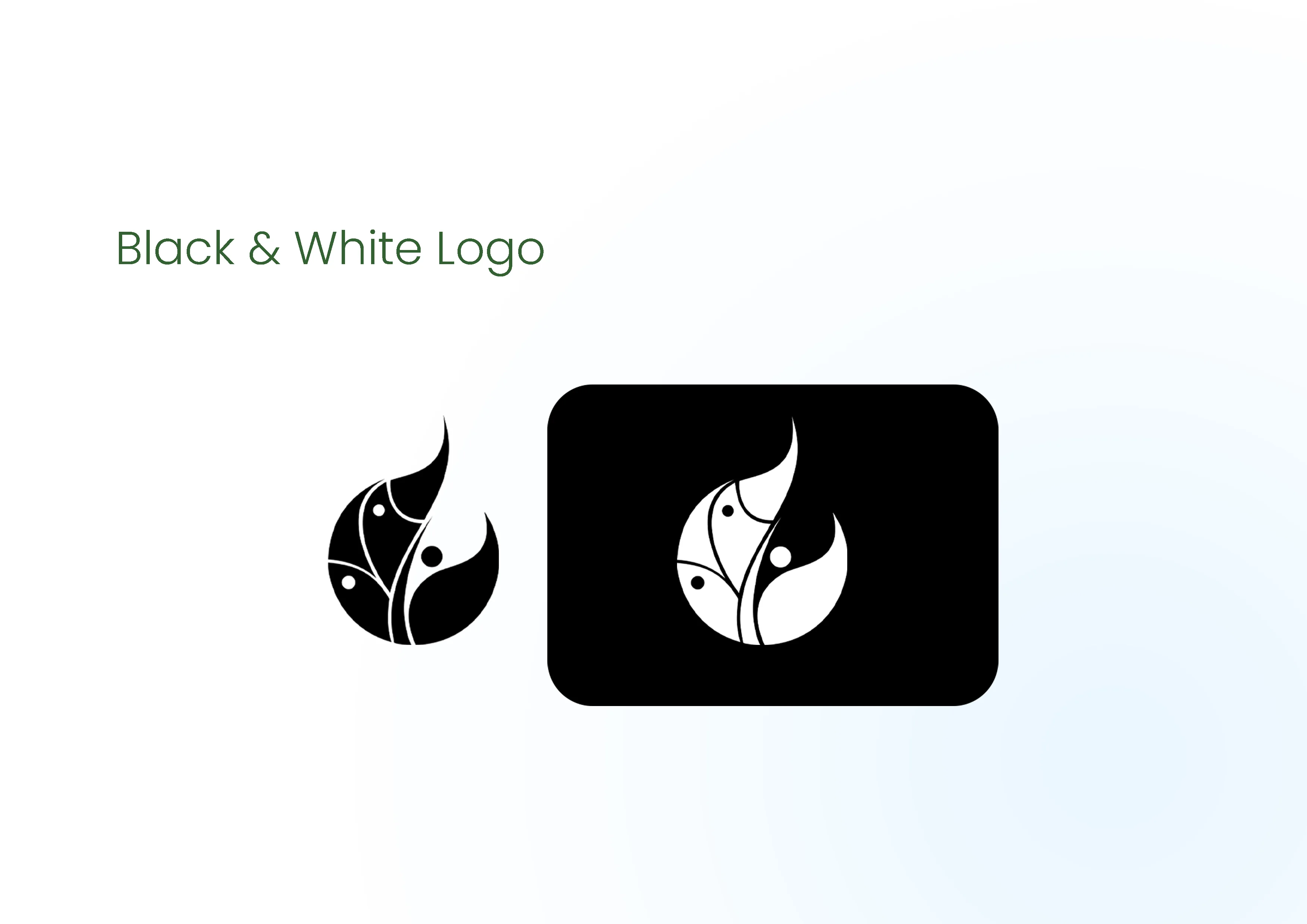
Monochrome — the mark holds under reduction
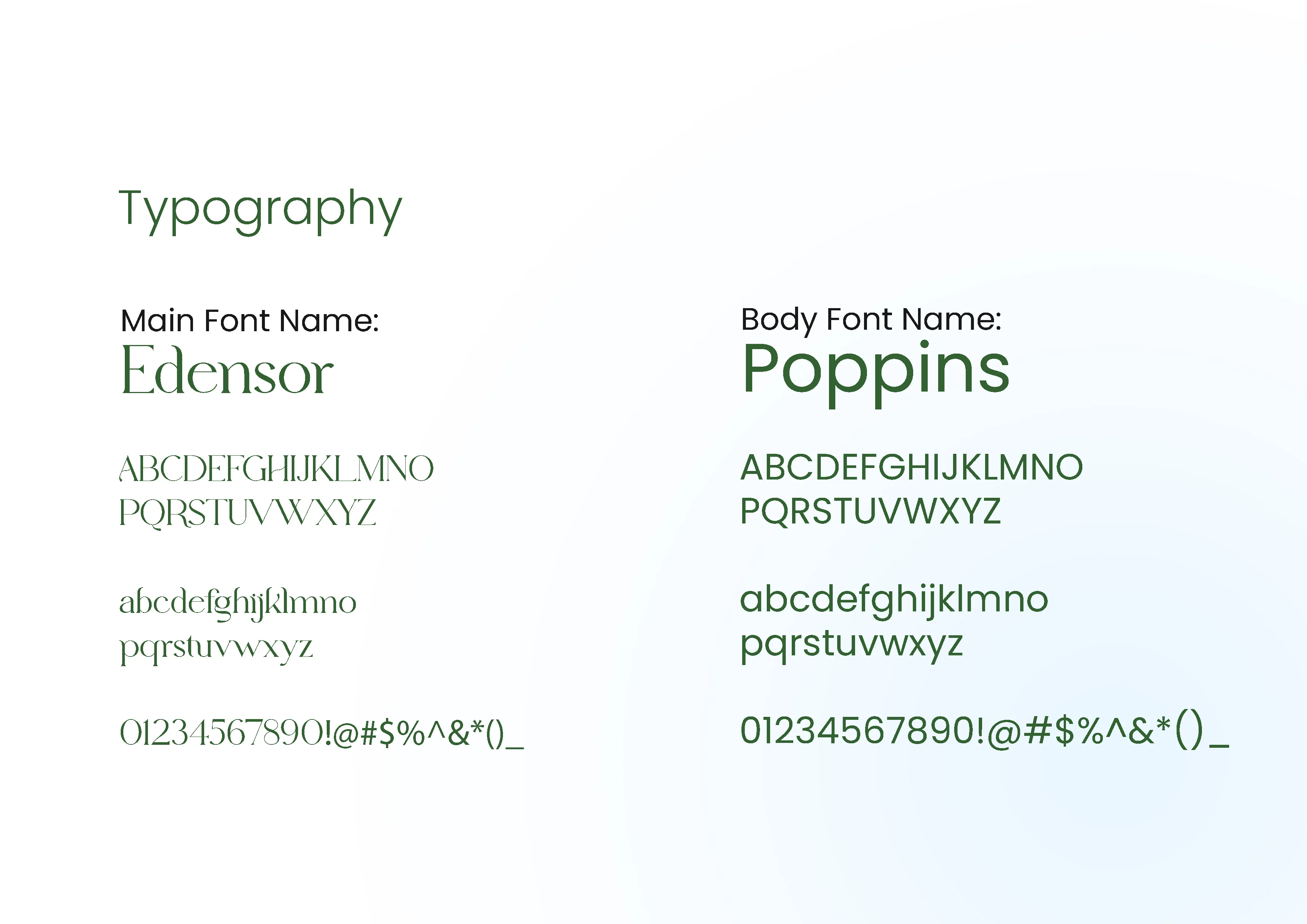
Typography — Edensor for display, Poppins for legibility
The Architecture
MindDhara is not a single product — it's a platform with three distinct sub-brands: Advantix, Couch, and Forward. Each addresses a different dimension of the wellness proposition. We designed the identity system from the start to accommodate this.
The parent mark anchors all three. The sub-brand name sits below the wordmark in a smaller weight, creating clear hierarchy without requiring a new visual language for each product. The horizontal lockup — mark, wordmark, sub-brand — works consistently across web, marketing, and product contexts.
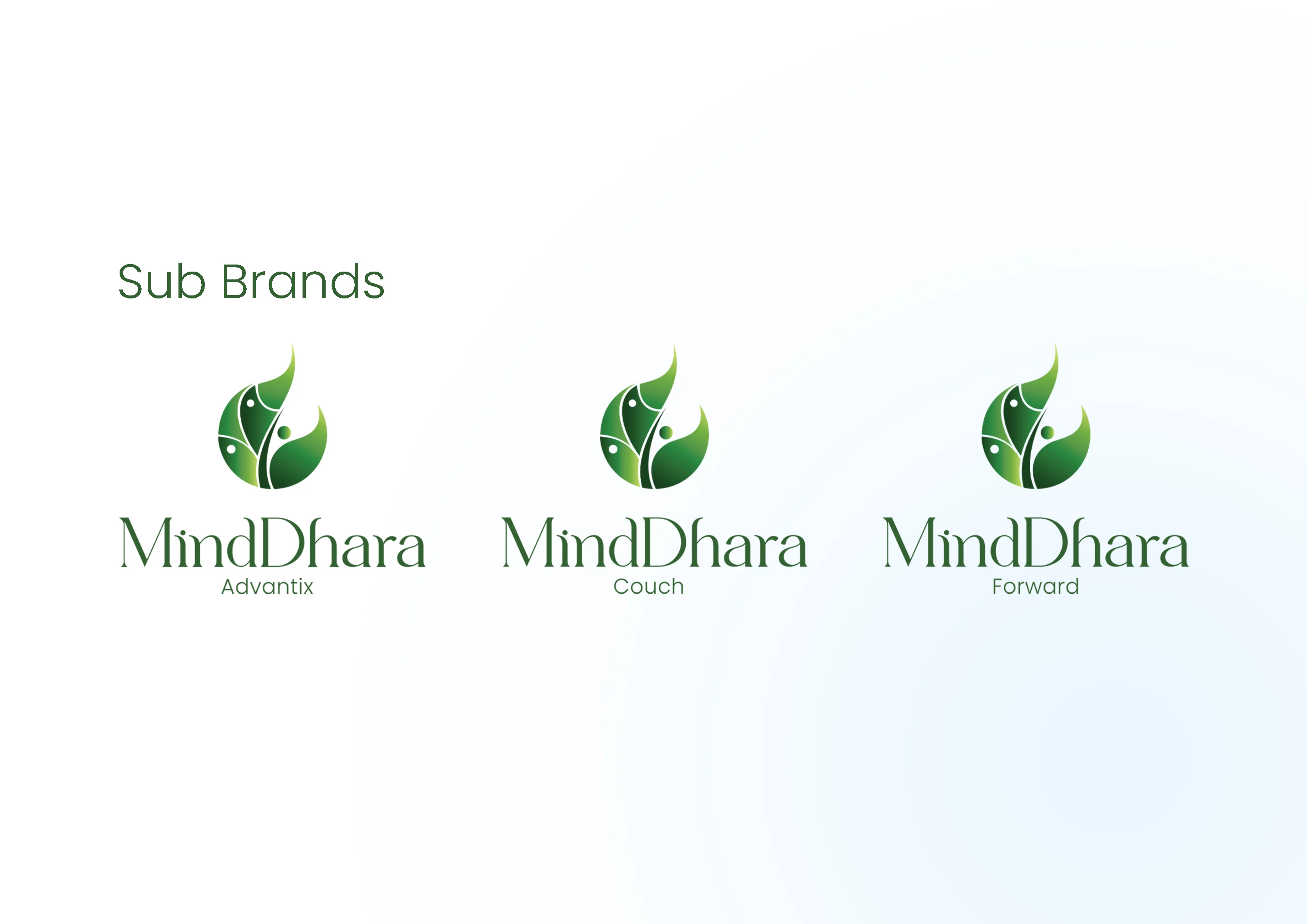
Sub-brand architecture — one mark, three identities
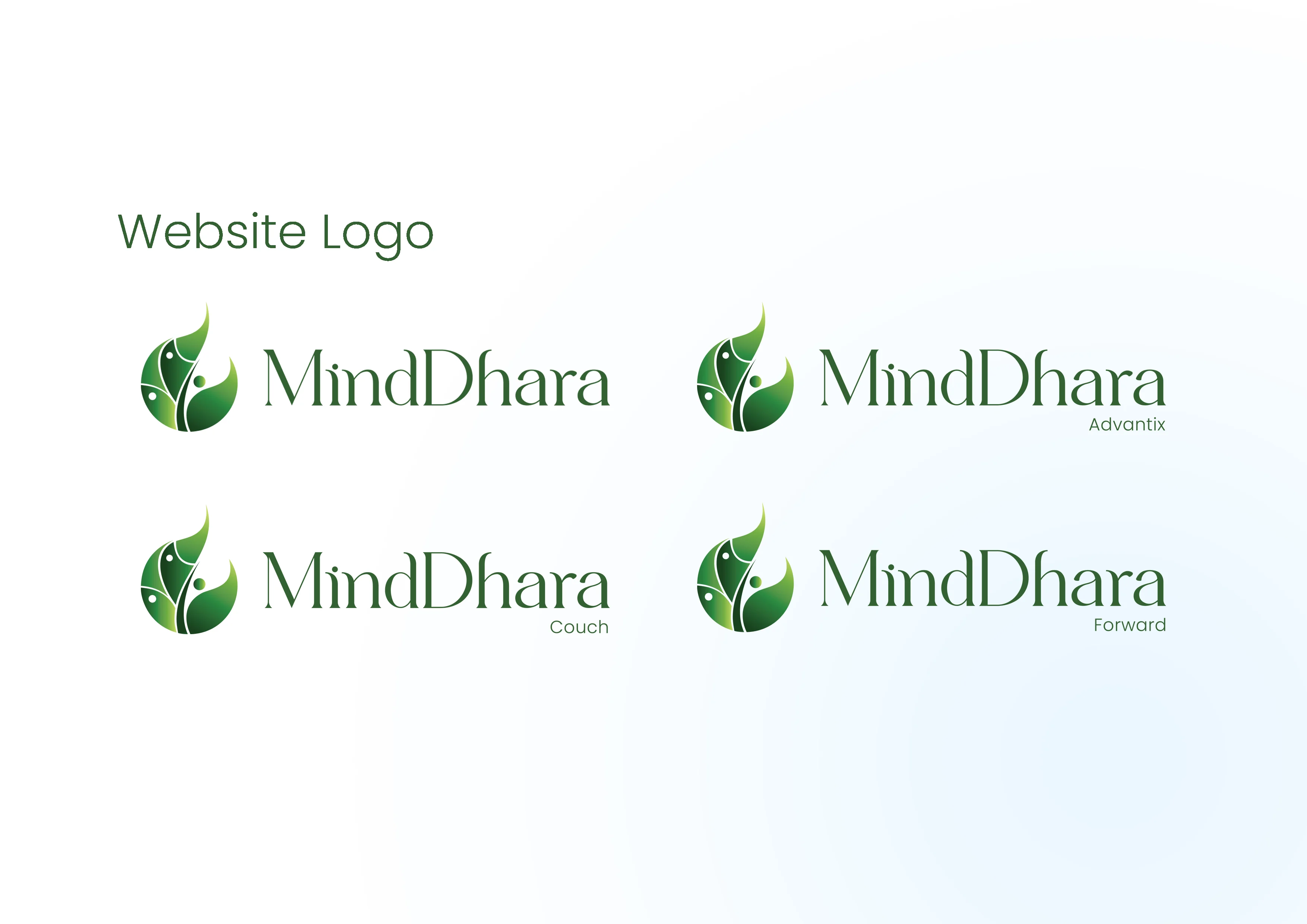
Horizontal lockups — consistent across all four brands