Case Study
Airovista
A focused B2B site built to make a pre-product company look ready for the room.
The Brief
Airovista is a cleanroom-grade air purification system built for high-occupancy public infrastructure — airports, metro stations, hospitals, and commercial spaces. The company behind it, Clean Air Systems, has 35 years of contamination control engineering for pharmaceutical, aerospace, and semiconductor industries.
The brief was a marketing site to support early investor conversations. The product was not yet manufactured. The site needed to establish credibility, communicate engineering heritage, and present the product range clearly — without overstating what existed at the time.
The build was kept intentionally lightweight so the site stayed fast-loading and easy to navigate, even with dense product information.
The Hero
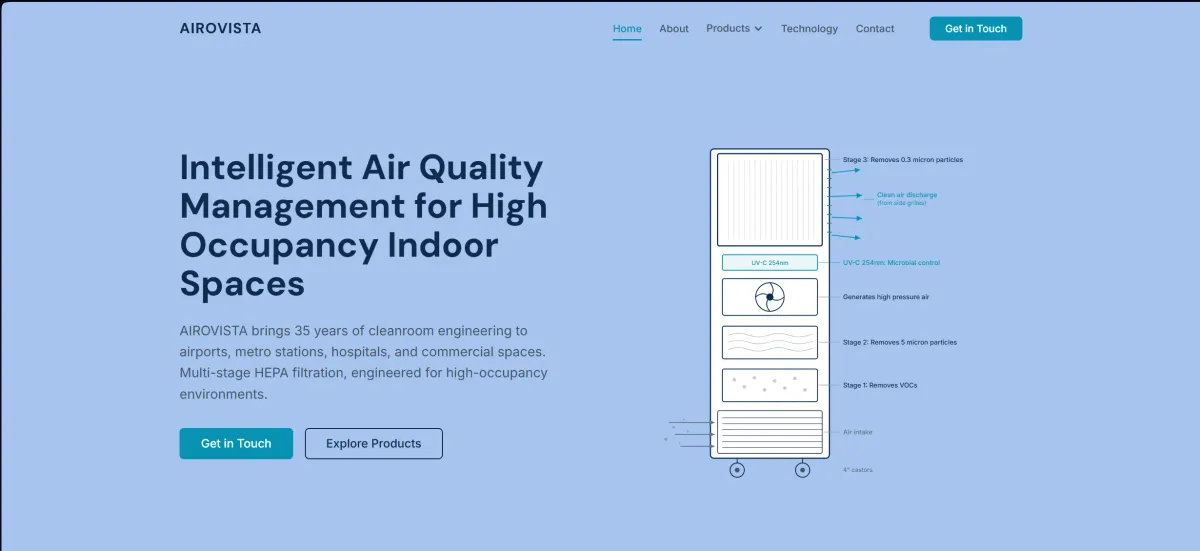
The headline names the product category and the target environment in one line: "Intelligent Air Quality Management for High Occupancy Indoor Spaces." No marketing language. The sub-headline leads with the 35-year engineering credential before describing the product — the right order for a B2B audience evaluating a new company.
The right side of the hero is a technical cross-section diagram of the unit showing each filtration stage labelled with its function: VOC removal, fine particulate filtration, UVC microbial control, HEPA terminal filter, and clean air discharge.
The Problem Frame
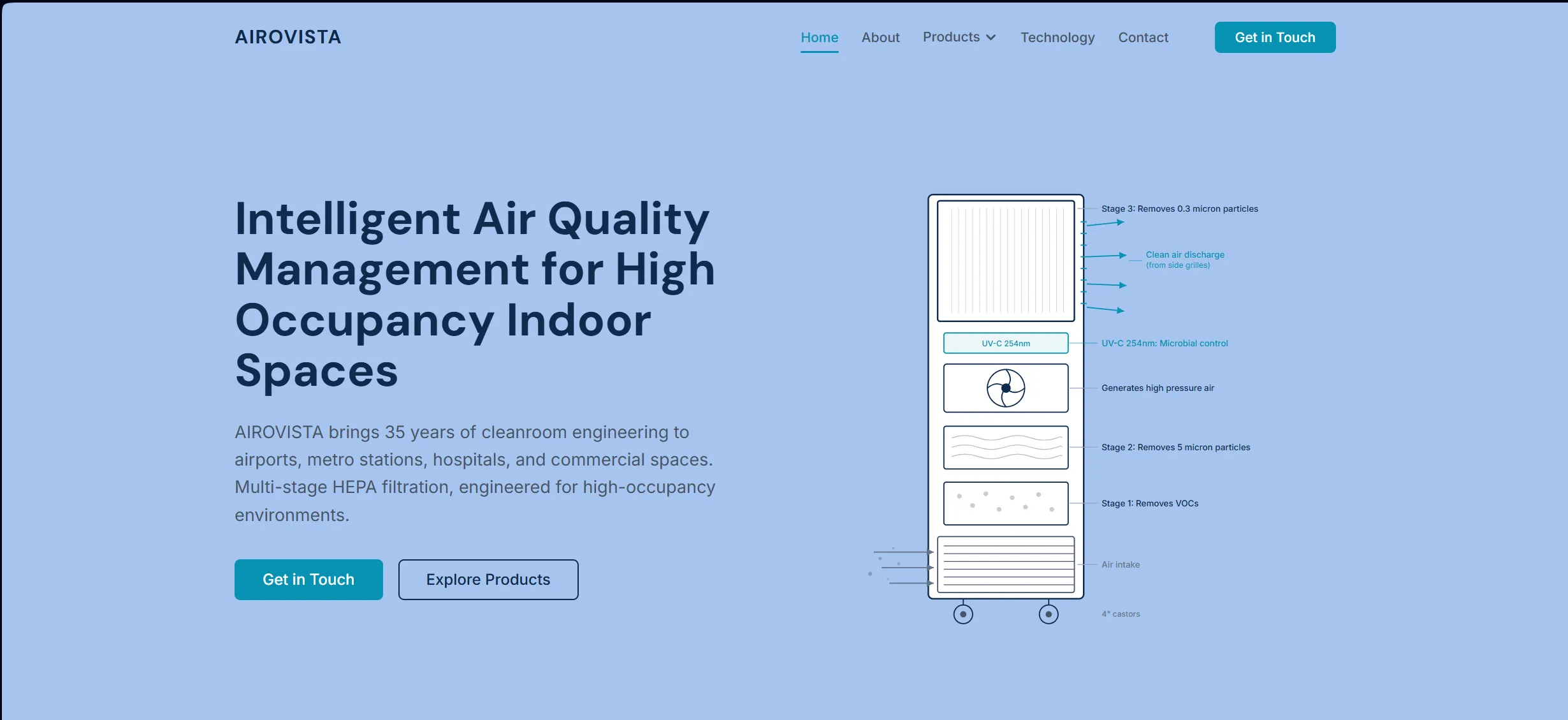
Before presenting the product, the site establishes why the problem exists. Four cards cover the specific failure modes of indoor air quality in high-traffic spaces: particulates resuspended by human movement, HVAC systems recirculating contaminated air, VOC and odour accumulation in enclosed environments, and the lower breathing zone where children, wheelchair users, and seated passengers are most exposed.
This section is aimed at facility managers and procurement leads who already know the problem but have not had it named precisely.
The Technical Diagram
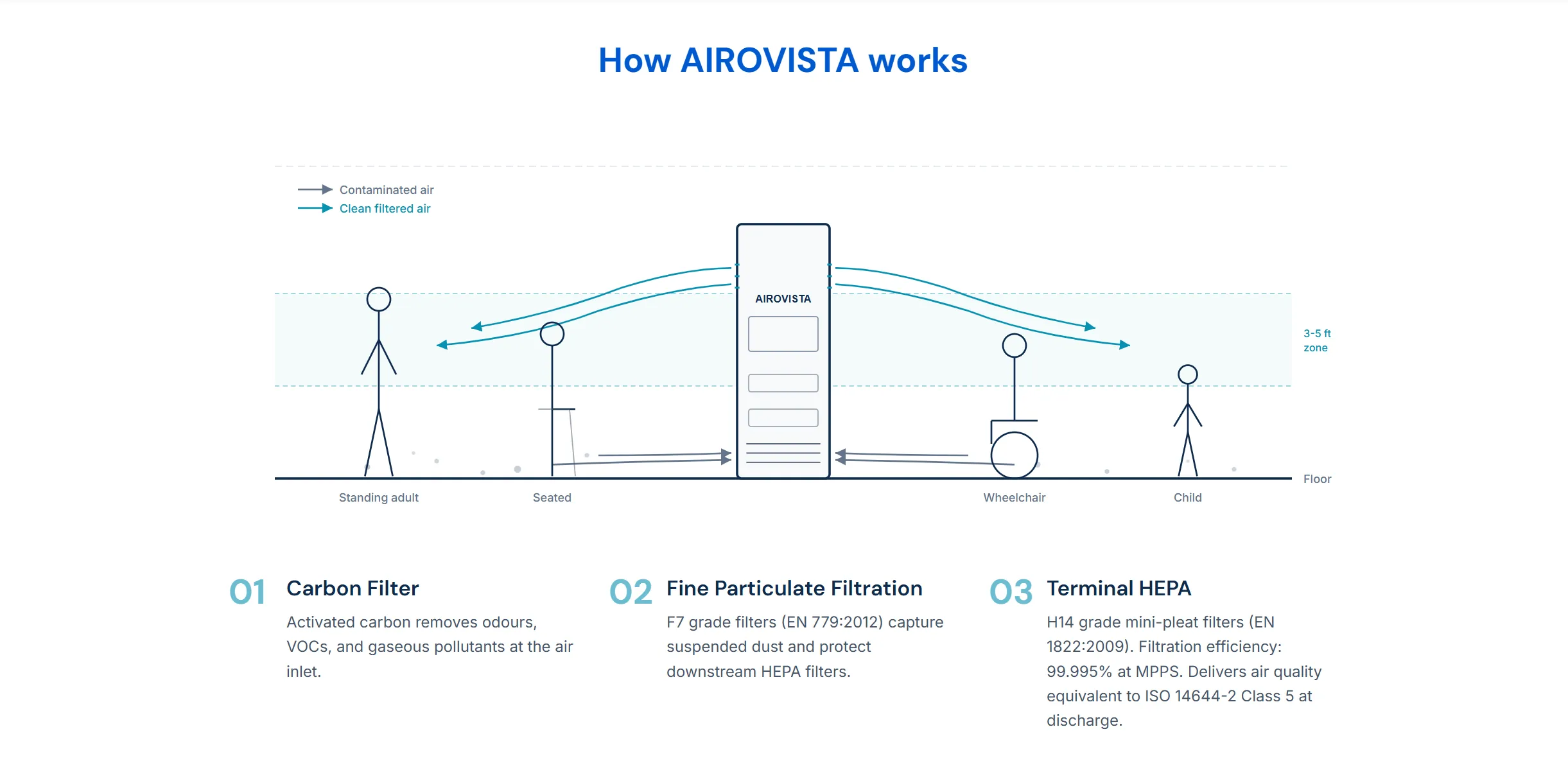
The "How it works" section leads with an airflow diagram drawn to scale for a typical public space. Contaminated air enters from floor level — where particulate concentration is highest — passes through the unit, and clean filtered air discharges at the 3–5 ft breathing zone across standing adults, seated passengers, wheelchair users, and children.
Below the diagram, three filtration stages are laid out with their technical designations: Carbon Filter for VOC removal, F7 grade pre-filters (EN 779:2012), and H14 terminal HEPA (EN 1822:2009) rated at 99.995% efficiency at MPPS. The standards are cited because this audience checks them.
The Product Range
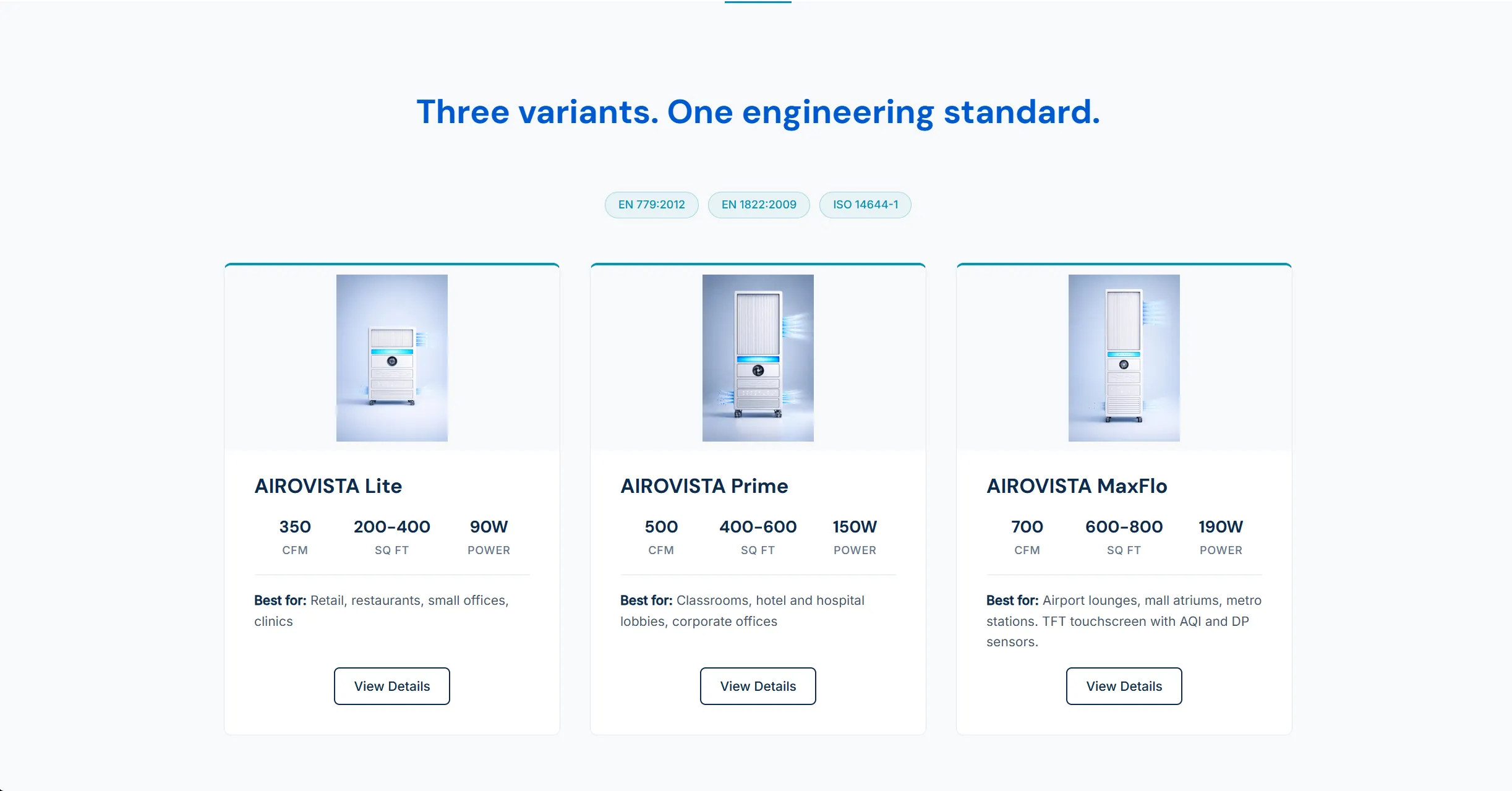
Three variants cover the full deployment range from retail spaces to airport terminals. Each card leads with the three specs that matter for specification: CFM airflow, coverage in square feet, and power draw. The "best for" line anchors each unit to a real deployment context without requiring the visitor to do the calculation themselves.
The product images are illustrative renders. At the time of build the units were not yet manufactured. The renders communicate form factor and scale accurately enough to support the specification conversations the site was built to enable.
The Credentials
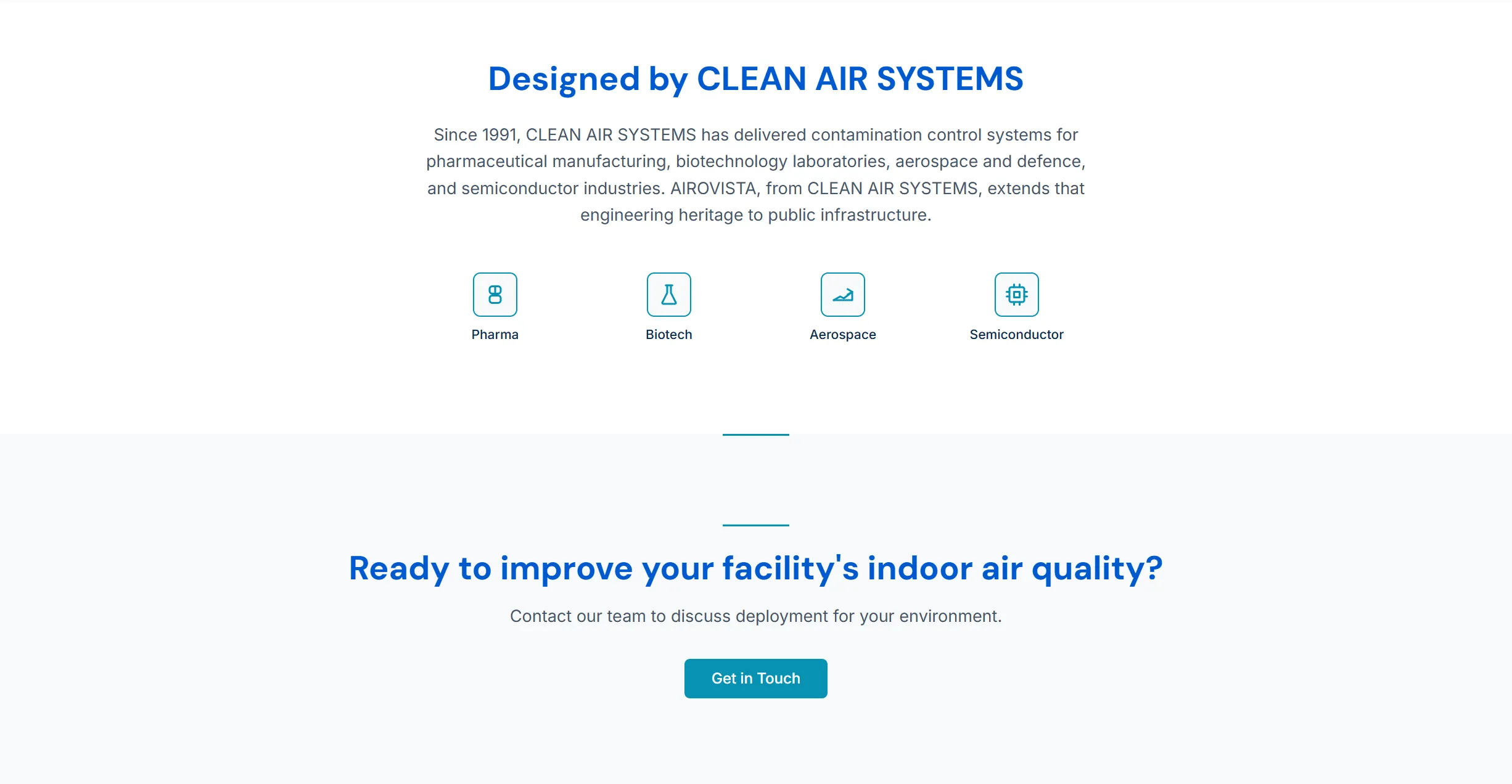
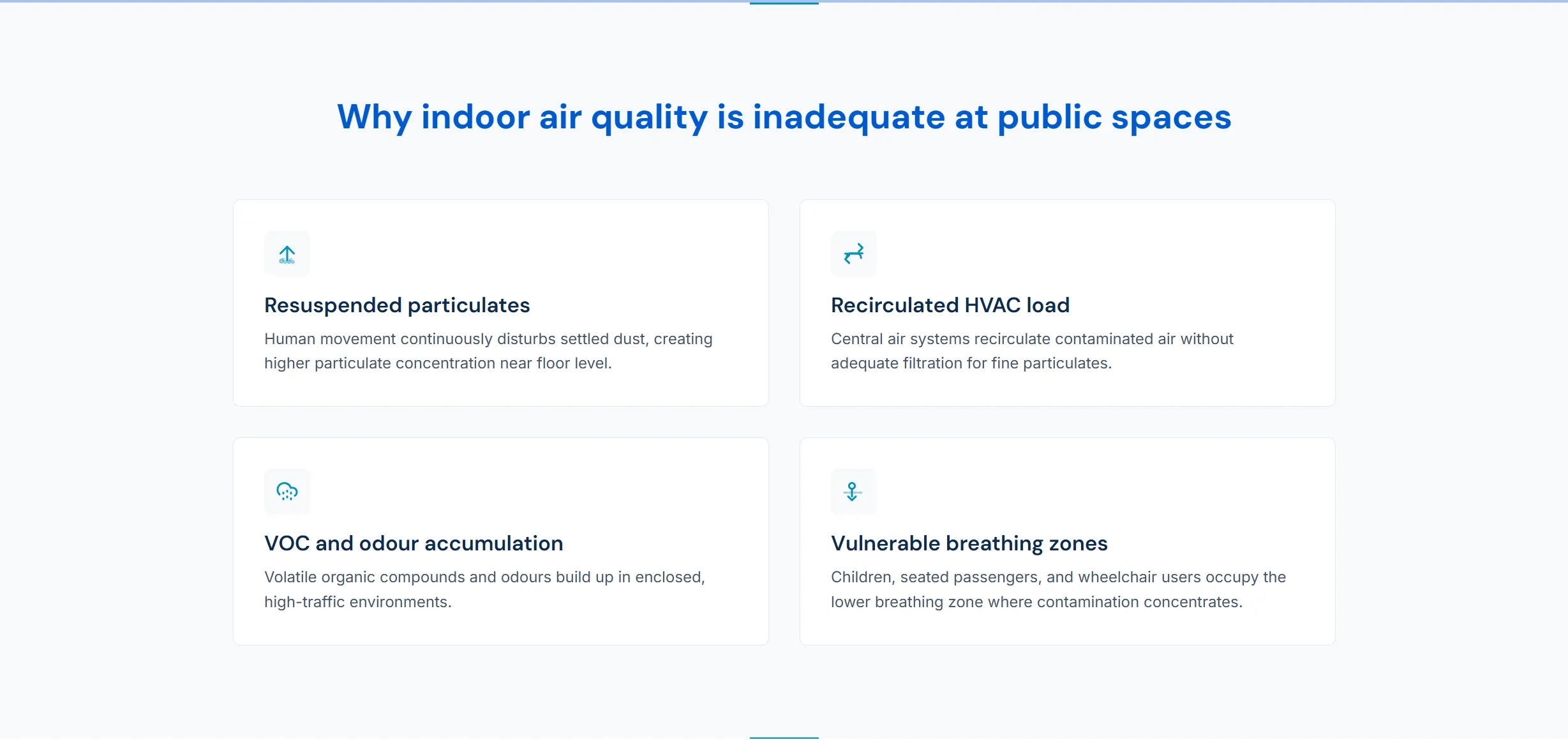
The final content section establishes the parent company's track record before the CTA. Clean Air Systems has operated since 1991 across pharmaceutical manufacturing, biotechnology, aerospace, and semiconductor industries — sectors where contamination control failures have regulatory and safety consequences. Four sector icons make the list scannable. The purpose of the section is to answer the question an investor would ask before any other: who built this and why should I trust them?