Case Study
Vortevia
A SaaS marketing site built to show the product doing the work.
The Brief
Vortevia is an AI-powered content automation platform. It helps teams find opportunities, plan content, and publish on a reliable schedule with minimal manual effort.
The brief was a marketing site that could do what most SaaS marketing sites fail at — show the product working, not just describe it. The target audience is digital marketing agencies and SMBs who have heard "publish more content" for years and still haven't solved the problem. They are sceptical of AI content tools. The site needed to address that scepticism before they clicked away.
The site was built to stay fast, clear, and reliable as visitors move through each proof section.
The Hero
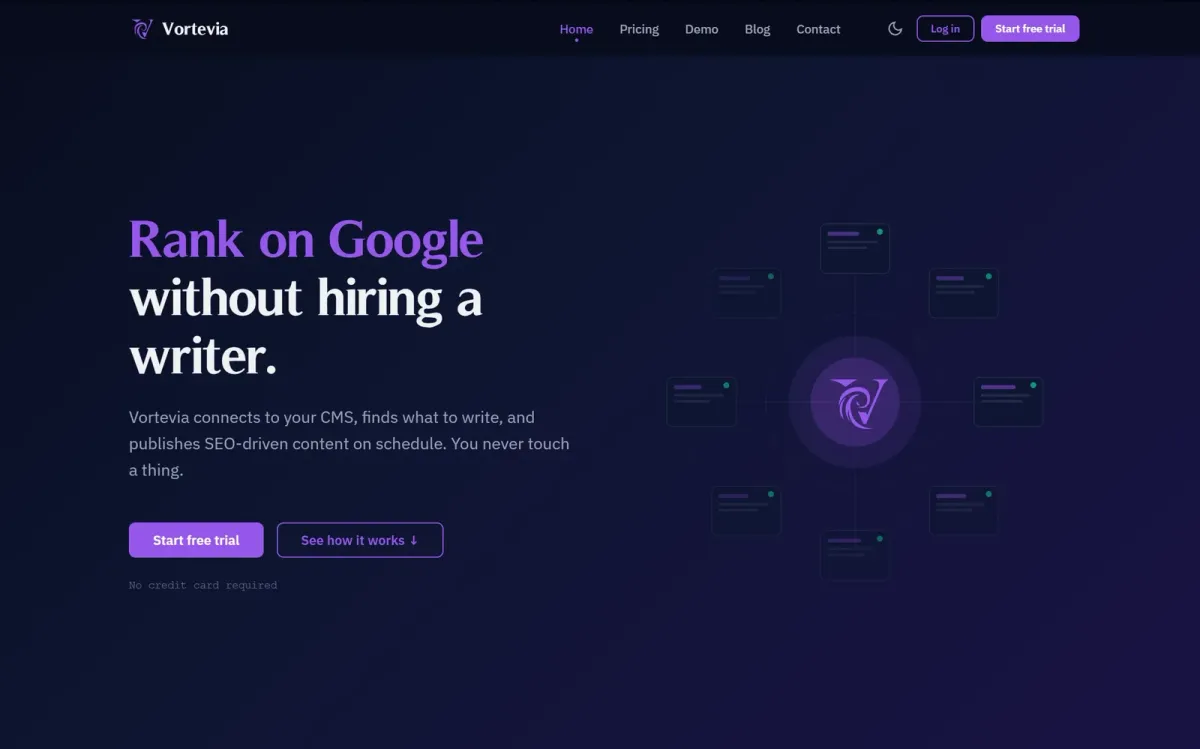
The headline does one thing: names the outcome and removes the expected cost. "Rank on Google without hiring a writer." No feature list, no jargon. The sub-headline explains the mechanism in plain language: find what to write and publish on schedule.
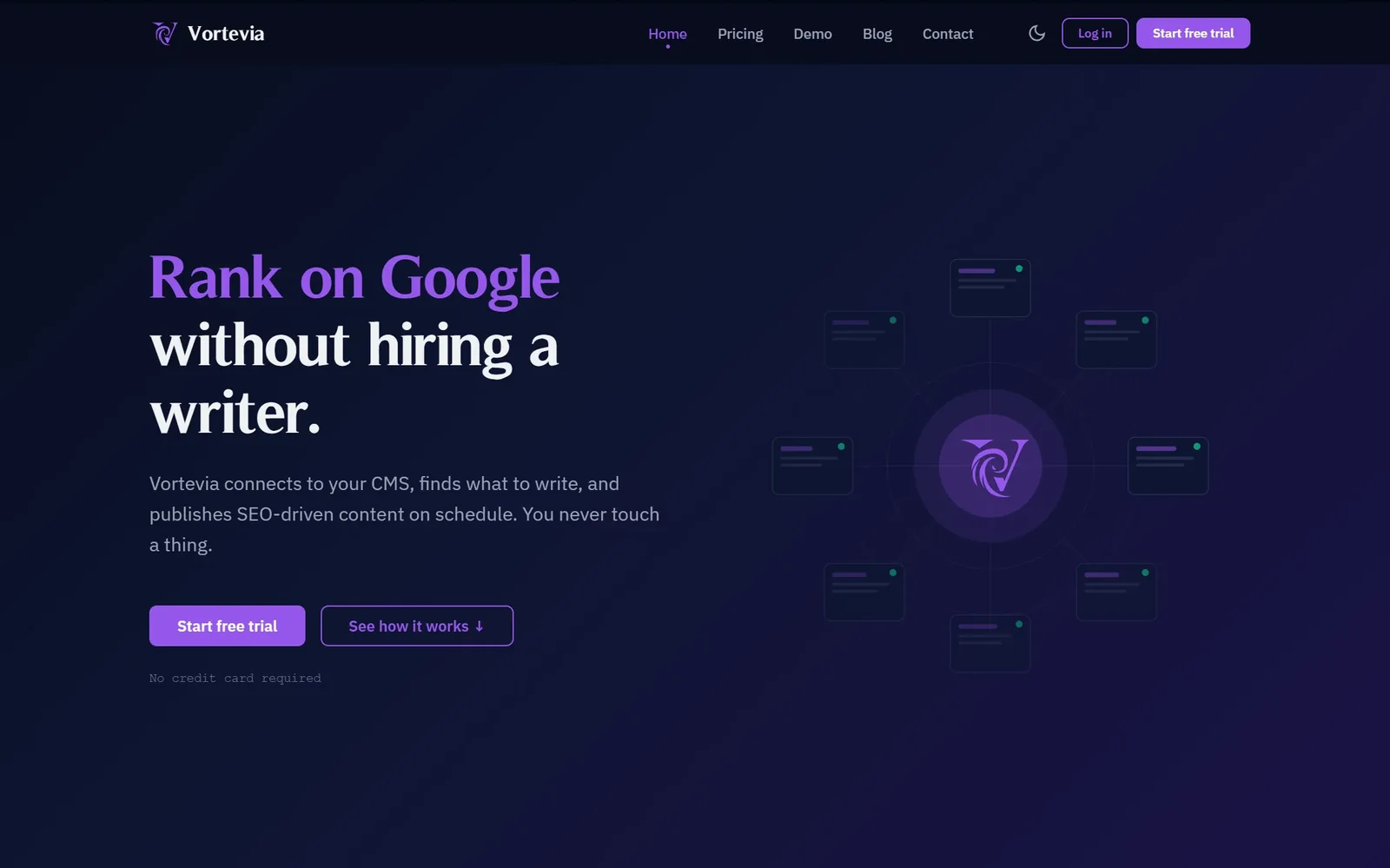
The right side of the hero is a static diagram of the pipeline — articles orbiting the Vortevia logo — which sets up the animated version below without requiring any interaction to understand.
The Pipeline Demo
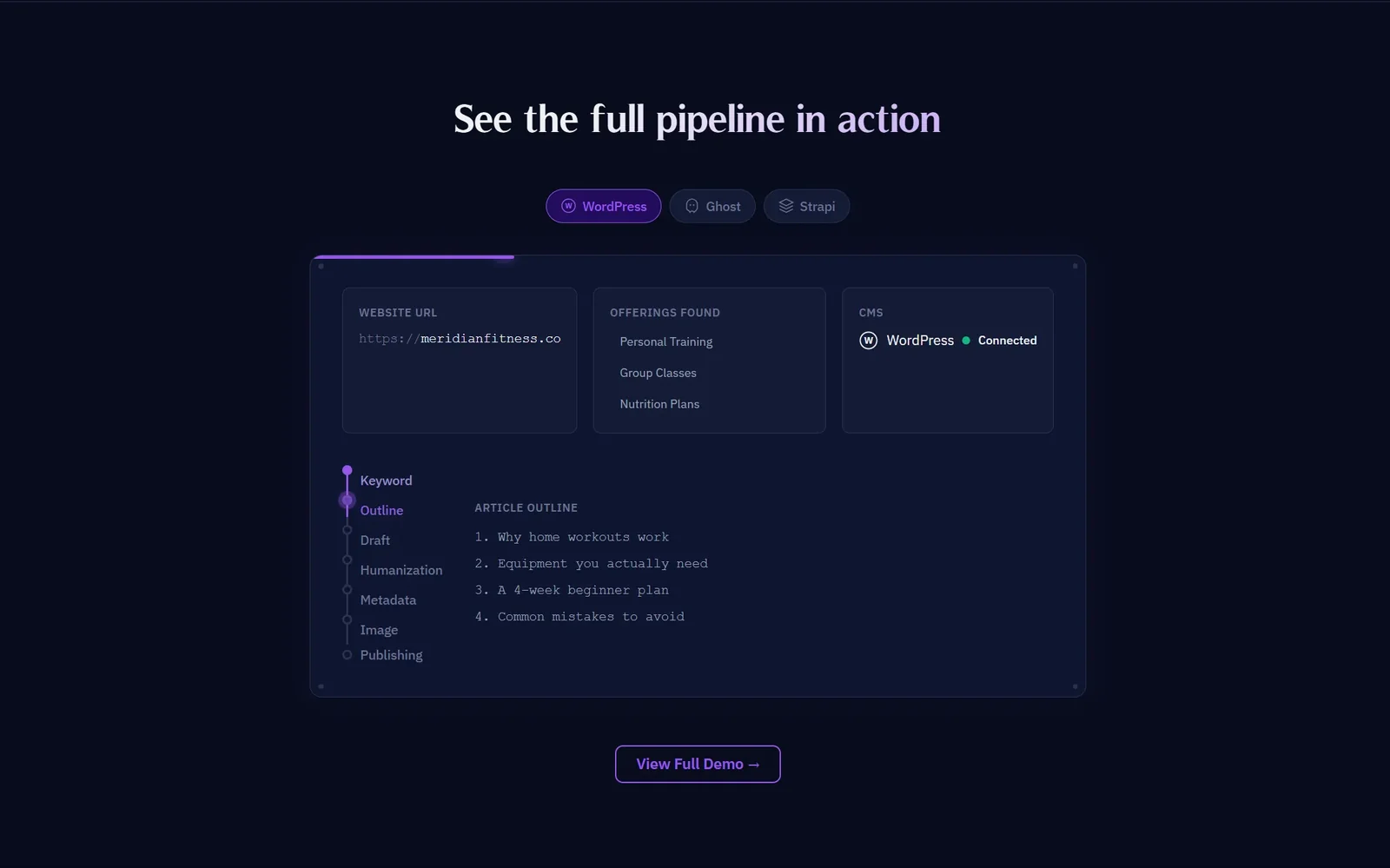
The homepage demo section runs automatically when visitors reach it. No click required. A sample business is pre-loaded, then the flow steps through planning, drafting, refining, and publishing.
Visitors can watch a publish-ready article go from zero to done while they read the page. The animation works as proof without forcing interaction.
The Objections
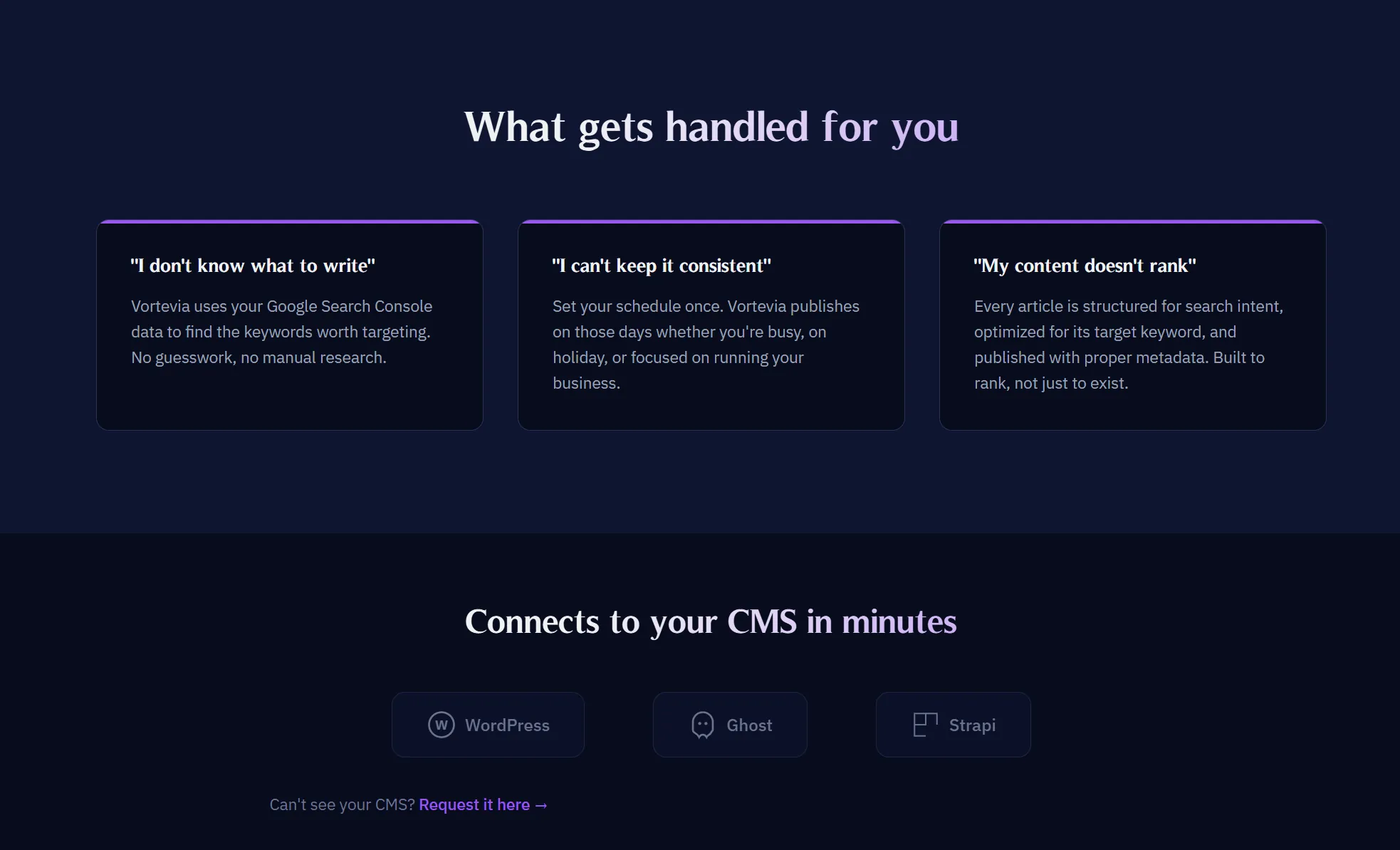
The next section reframes the three objections that kill content consistency for small businesses: not knowing what to write, not keeping up a schedule, and publishing content that doesn't rank. Each card leads with the objection in quotation marks — the exact language a business owner would use — then answers it in one short paragraph.
This section does not sell features. It sells relief from a known frustration. The structure forces the copy to stay specific rather than generic.
The Integration Section
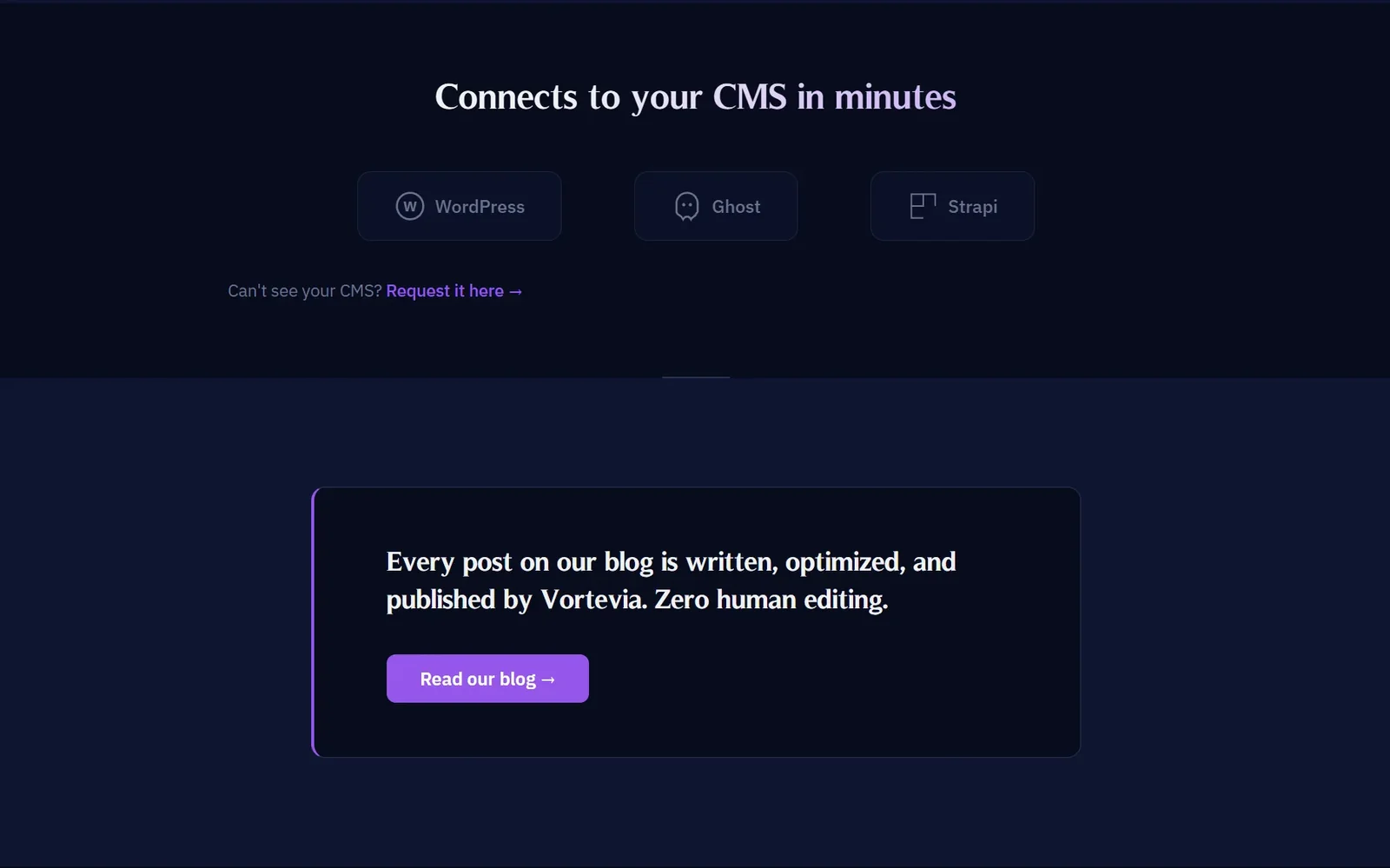
Compatibility is a decision gate for this audience. If their workflow does not fit, they leave. This section answers that quickly with supported paths, a fallback option, and a proof statement showing the product in real use.
The Interactive Demo
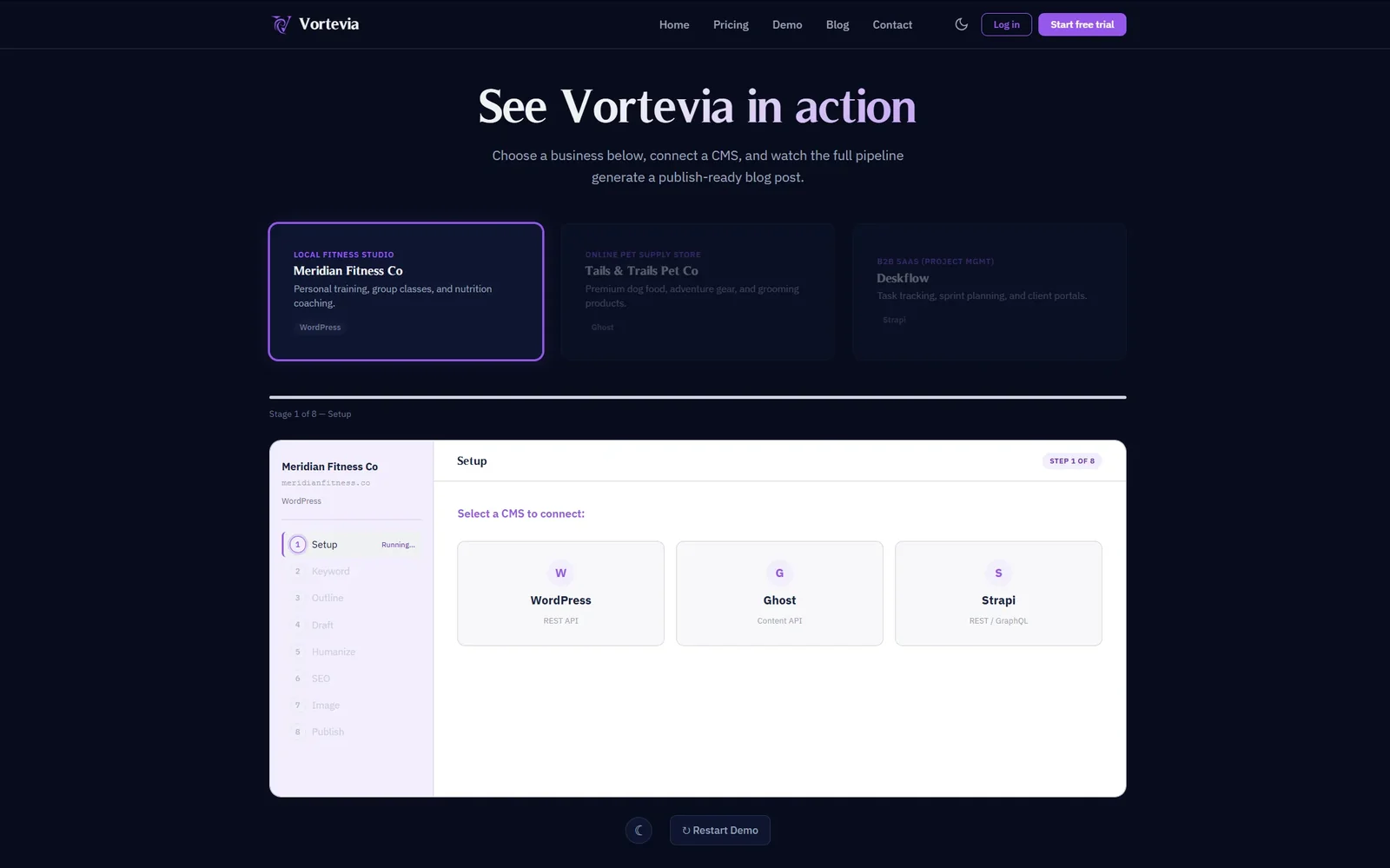
The demo page is where the site earns its keep. Three fictional businesses represent three distinct buyer types. The visitor picks one and watches an 8-stage flow from setup to publish.
The only input the visitor makes is the selection. Everything after that is automatic. The pipeline produces an article outline, draft, humanised copy, SEO metadata, and a featured image, then stages it for publishing. The message lands without being stated: this is the only effort Vortevia requires from you.
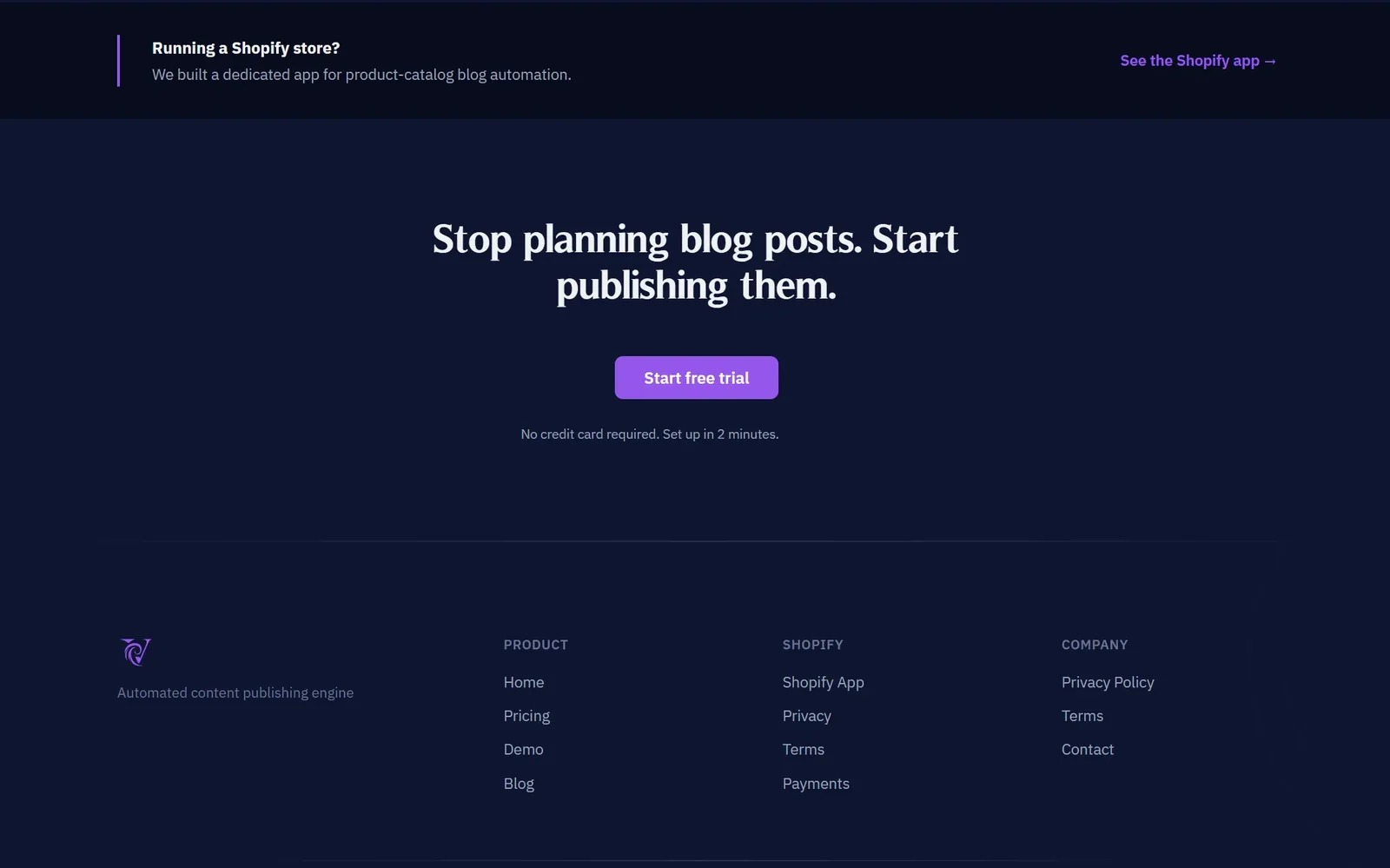
The final CTA — "Stop planning blog posts. Start publishing them."